
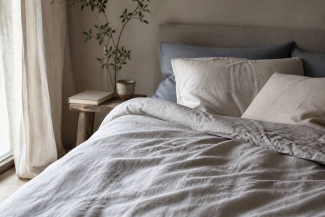
Natural Bedding for Cold Weather: How to Choose Layers
Updated September 2, 2026 — revised for clearer, more practical cold-weather bedding guidance.
Quick answer: Cold-weather comfort comes from adjustable layers, not from fibre alone. Choose breathable sheets that feel comfortable against the skin, then add a duvet, blanket or throw that suits the room temperature. Check fibre content, construction and care instructions rather than relying on broad “natural” claims.
Start with breathable sheets
Sheets form the layer closest to the body, so handle and moisture management matter throughout the night. Linen and cotton are both common choices. Linen has a textured, relaxed feel, while cotton can range from crisp to smooth depending on its weave and finish. Neither fibre guarantees the same result across every product.
When sewing your own bedding, compare composition, weight, weave, finish and opacity. The home-decor linen fabric collection provides a useful starting point, and a fabric sample lets you assess the material in your own light before ordering a larger length.
Build warmth in removable layers
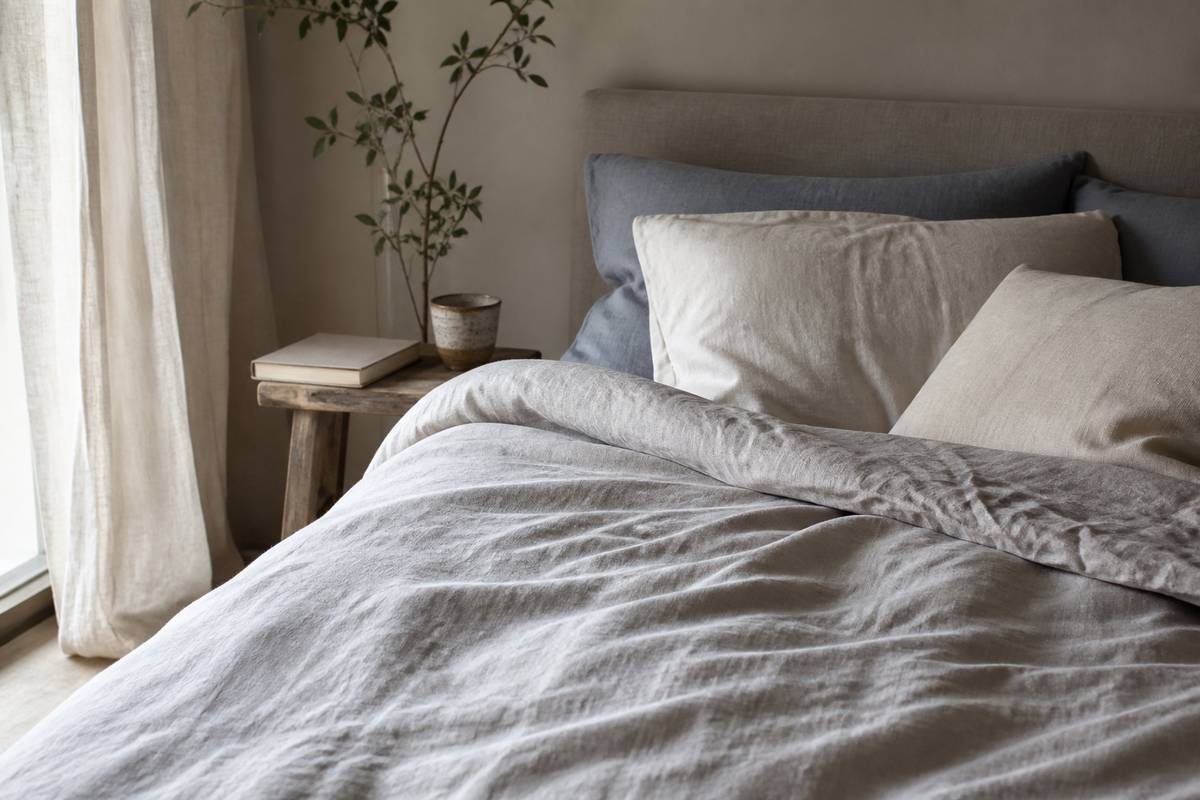
A sheet does not need to provide all the warmth. Use a duvet appropriate to the season, then add a blanket or throw that can be removed easily. This is more flexible than choosing one very heavy layer, especially when bedroom temperatures change overnight.
- Begin with comfortable sheets and pillowcases.
- Add the duvet or filled layer suited to the room.
- Keep a blanket or throw within reach for colder periods.
- Avoid piling on so much bedding that sleep becomes uncomfortably warm.
Check size, construction and care
Measure the mattress width, length and depth before buying or making fitted sheets. For duvet covers, compare the finished dimensions with the duvet rather than relying only on labels such as double or king, which can vary between brands and markets.
Follow the care instructions for the finished item. Wash colours separately, avoid overloading the machine and dry according to the product label. If you are choosing fabric for a sewing project, allow for possible shrinkage and test-wash a sample first.
Choose colour and texture for the room
Warmth is also visual. Natural, oat, clay and muted grey shades can make a winter bedroom feel calmer, while pale colours keep the room light. Washed finishes create a relaxed surface; crisper weaves produce a neater look. Order linen fabric samples when shade, texture or drape is important.
A practical cold-weather checklist
- Measure the mattress and duvet.
- Read fibre-content and care labels.
- Compare weave, weight and finish.
- Use removable layers rather than one inflexible setup.
- Test samples before committing to cut fabric.
For a broader pre-purchase guide, see six steps to take before buying bed linen.