
How to Choose Bed Linen: 6 Things to Check Before Buying
Updated August 18, 2026
Good bed linen is easier to choose when you look beyond colour and thread count. Accurate measurements, fibre composition, weave, fabric weight, finishing and realistic care requirements all influence how a set will feel and how long it will remain useful.
Use this six-step checklist before buying so the bedding fits your bed, your sleeping preferences and your laundry routine.
1. Measure the mattress, duvet and pillows
Names such as double, queen and king are not identical in every country or brand. Measure the mattress width, length and depth. Deep mattresses and toppers need a fitted sheet with enough pocket depth to sit securely under the corners.
Measure the duvet and pillows rather than relying on the bed name. Note whether you use square or rectangular pillows and whether the duvet cover includes enough tolerance for shrinkage stated by the maker.
2. Choose the fibre for the way you sleep
Linen is breathable, moisture-responsive and durable, with a relaxed texture that softens over time. Cotton can feel smoother and is available in many weaves. Blends may reduce cost or change crease recovery, but the label should state the full composition.
If you sleep warm, prioritise airflow and moisture management. If you prefer a warmer, smoother surface, consider the weave and fabric weight rather than assuming every product made from one fibre feels the same.
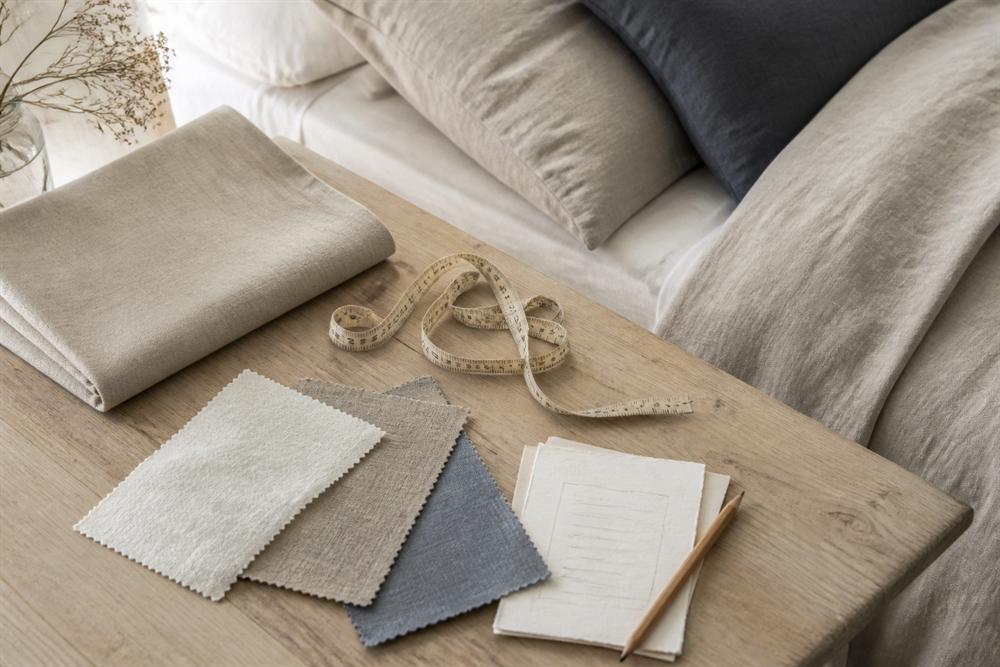
3. Understand weave, weight and thread count
Thread count can be informative for some cotton fabrics, but it is not a universal quality score. Fibre quality, yarn, weave, finishing and honest construction matter too. Linen is often described by weight in grams per square metre and by its weave or finish.
A lighter fabric may feel airy, while a medium-weight fabric can offer more substance. Very high numbers and vague luxury claims should not replace clear specifications and a useful sample.
4. Check how the fabric was finished
Prewashed or stonewashed linen starts with a softer, more relaxed handle and is less likely to change dramatically after the first wash. Untreated linen may feel crisper and soften gradually. Neither finish is automatically superior; it depends on the look and feel you prefer.
Natural slubs and small yarn variations are part of linen's character, not necessarily faults. Ask for a fabric sample when colour, opacity or texture is important.
5. Read the care instructions before buying
Make sure the recommended wash temperature and drying method fit your household. Bedding that requires a routine you cannot maintain will not be a practical purchase. Check whether the maker allows tumble drying and whether ironing is optional.
Allow space for laundering and storage. Two or three dependable sets that rotate well are often more useful than several sets that do not fit properly.
6. Compare the complete value
Look at material, construction, replacement options and expected life rather than price alone. Useful details include closure type, seam quality, spare buttons, individual pieces and clear returns information. A higher initial cost can be reasonable when the fabric is durable and the set can be maintained for years.
Frequently asked questions
Is a higher thread count always better?
No. Thread count is only one specification and is less useful for linen than fibre quality, weave, weight and finishing.
Should I wash new bed linen before use?
Usually yes, following the maker's instructions. Washing removes handling residue and allows the fabric to settle.
How many bed-linen sets do I need?
Two sets per bed provide a practical minimum: one in use and one ready while the first is being washed. Add another when drying time or guest use requires it.