


Why We're Talking about the Menopause
The menopause is still something of a taboo subject for many people. Shrouded in mysterious language like, 'The Change', there are misconceptions and misunderstandings about just how this life event could affect us. Some women sail through with very few difficulties, but for others it can be a very challenging time. Menopause can cause changes in your body shape, mood swings, hot flashes, skin breakouts, aches and pains, 'brain fog' and tiredness. Pile these on top of your normal everyday tasks and worries, and this can be a stressful and painful time for many of us. The more we talk about it, the more we can help others understand what's going on for their friends, their mothers, their sisters and their colleagues.
We thought we'd apply our slow living philosophy to thinking about the menopause, and share ideas for comfort and self-care alongside evidence-based support. These are not medical treatments. If symptoms affect daily life, NHS menopause guidance and a healthcare professional can help you consider options.
Invest in linen bedlinen

Sleep problems are common amongst perimenopausal and menopausal women. Interruptions to sleep patterns can be caused by the fluctuations in your hormones, needing to go to the toilet more frequently, stress and night sweats. For comfort, try lightweight layers and keep the bedroom cool. You may enjoy the feel of pure linen bedlinen, but bedding is not a treatment for night sweats and no material guarantees more sleep. The NHS suggests lightweight clothing and a cool sleeping space. As well as sorting out your bedlinen, make sure you don't eat late at night as this can interfere with sleep. Banish screens from the bedroom and try to keep to a regular sleep schedule.
Take time out
If you feel overwhelmed or exhausted try to build a bit of time away from things into your day. Whether that's taking your lunch outside and feeling the sun on your face or going for an evening walk, a few minutes spent in nature and away from work/ family/ duties can help clear your head. Go on a date with yourself, somewhere fun and special and different.
Make lists
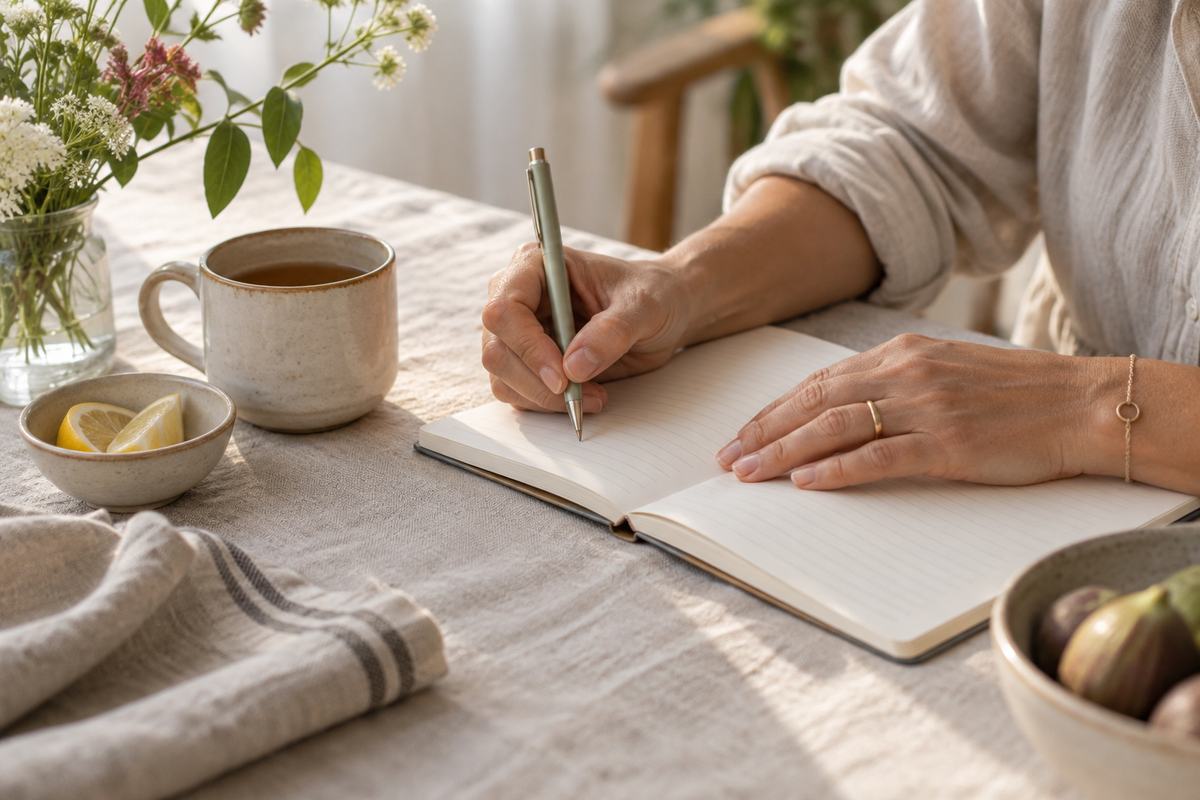
If you find that shifting hormones have left you forgetful and feeling scattered, try making a list last thing at night. Fill it with all the things you need to do the following day, along with anything you feel worried about. That way you can check back in the morning and add any extra tasks, as well as getting anxieties out of your head so you can sleep more peacefully. Give yourself a back-up by writing things down so you don't have to rely on remembering everything and then beating yourself up when you don't.
Talk
It really helps to share how you're feeling, whether you're struggling with coming to the end of your fertile years, or simply feeling weepy. Talk to friends, reach out for advice, and if things are tough go and see your doctor. Other women may be going through exactly the same things as you, or may have advice and experience of different treatments. It will make you feel less alone, and you might be able to help someone else too.
Stay healthy
Many women find they put on weight during the menopause. Some are fine with this, but for others it can be tricky to see your body changing. Stay healthy by eating regular, small meals packed with vegetables and fruit. Exercise to keep your bones strong and ease any muscle tension - yoga is great for gently building strength and toning when our muscles begin to lose their definition. Do not rely on supplements to relieve symptoms without checking the evidence and discussing them with a clinician, especially if you take medication.
Choose loose, breathable clothes
If you are experiencing annoying and embarrassing hot flashes, keep your clothing loose and unrestrictive. Choose lightweight, loose clothing that feels comfortable; linen clothing is one option, but it does not stabilise body temperature or treat hot flushes. Try to work out your trigger points for hot flashes, like alcohol or spicy food, and avoid these if possible. Keep a cold bottle of water nearby to cool you down. Breathe slowly and deeply, and try not to panic if you feel yourself sweating as stress can exacerbate things. Try this breathing technique to help calm your mind if you feel a hot flash starting: breathe in for a count of four, hold for four, breathe out for four, hold for four. Then repeat until you feel more relaxed.
These small adjustments may make daily life more comfortable, but results vary. If symptoms are persistent, severe or affecting your wellbeing, speak to a healthcare professional about evidence-based support.
Do you have any tips on how to have a happier menopause? We'd love to hear from you.
I do enjoy the visual beauty of your site. However, concerning menopause, it would be more reflective of reality if the women you show in photos within this article were actually women of the age that menopause becomes a reality - that would be, normally speaking, 50+.
Thank you,
Lana