What Is Railroaded Fabric? Upholstery & Curtain Guide
Quick answer: what does railroaded fabric mean?
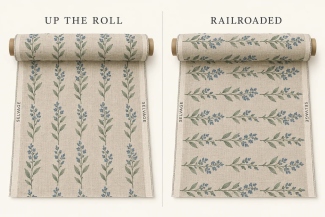
Railroaded fabric has its design or directional feature running across the width of the roll, from one selvedge to the other. With standard, or up-the-roll, fabric, the design runs along the length of the roll. This difference can determine whether a sofa back, long bench cushion or wide window treatment can be covered in one continuous piece or needs joined widths.
Railroading is useful, but it is not automatically suitable for every cloth. Pattern direction, weave, nap, stretch, backing and the maker's intended end use all matter. Before rotating any fabric, check the specification or ask the supplier to confirm that it may be used in that direction.
Railroaded versus up the roll
Imagine a bolt of fabric unrolling towards you. On an up-the-roll design, the top of a flower, stripe or other motif points along the length of the bolt. On railroaded fabric, that design is turned through 90 degrees and runs across the width. The name comes from the way repeated elements can resemble railway sleepers crossing the roll.
| Feature | Up the roll | Railroaded |
|---|---|---|
| Design direction | Along the fabric length | Across the fabric width |
| Typical advantage | Natural orientation for curtains and many cut panels | Can cover a long horizontal span without a seam |
| Common applications | Curtains, clothing and directional panels | Sofa backs, benches, banquettes and long cushions |
Why fabric orientation matters for upholstery
Many furnishing fabrics are approximately 140–150 cm, or 54–60 inches, wide. A sofa back can be considerably longer. If a pattern must remain upright and runs up the roll, the upholsterer may need to join two or more widths, match the design at each seam and allow extra material for the repeat.
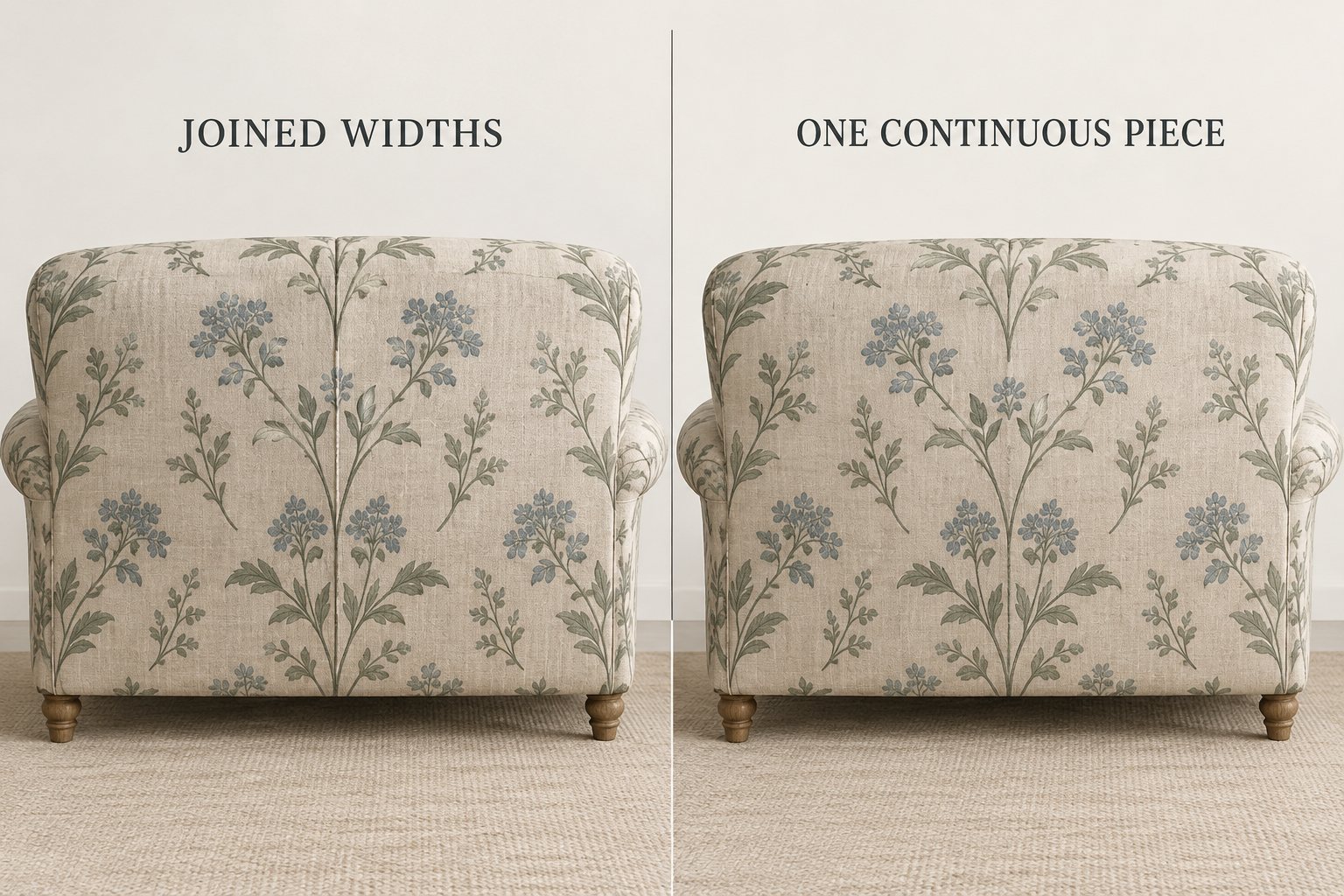
A suitable railroaded fabric can instead run continuously along a wide sofa back or banquette. This may remove a visible seam and sometimes reduce waste. It is especially valuable for stripes and other designs where even a small mismatch would be noticeable.
This does not mean that railroaded fabric always uses less material. The shape of the furniture, number of cushions, motif placement, piping and repeat can change the cutting plan. Start with our upholstery fabric yardage guide, then have the final quantity checked against the actual furniture and fabric specification.
Can plain linen be railroaded?
Some plain woven linens appear similar in both directions and may be usable sideways, but appearance alone is not enough to decide. Warp and weft yarns can differ in tension, strength, stretch or colour. A finish or backing may also be designed to perform in one orientation.
For an occasional decorative panel, orientation may be mainly an aesthetic decision. For a fitted sofa cover, seat, commercial banquette or other stressed application, the construction and recommended end use are more important. Choose from fabrics specifically described as suitable for linen upholstery and confirm railroading before ordering.
When should fabric not be turned sideways?
Do not assume that a fabric can be railroaded when it has any of the following characteristics:
- a flower, animal, landscape or other motif with an obvious top and bottom;
- pile or nap that changes shade when viewed in a different direction;
- a directional herringbone, rib, slub or surface texture;
- stretch or give that is needed in a particular direction;
- a backing, coating or treatment with orientation requirements;
- manufacturer instructions specifying up-the-roll use; or
- performance testing that applies only to the intended orientation.
Velvet is the clearest warning example: rotating one panel can make it look like a different colour because the pile reflects light differently. Our guide to fabric nap and directional cutting explains how to identify this effect.
How stripes and pattern repeats affect the decision
A stripe makes orientation immediately visible. A stripe running up the roll will normally appear vertical when the fabric hangs in its usual direction. Railroad the cloth and that same stripe becomes horizontal. Neither direction is inherently correct; the right choice depends on the design, the object and whether the fabric is technically suitable for rotation.
Pattern repeat also affects quantity. Every adjacent panel must begin at the correct point in the design if motifs are to align across seams, cushions or curtain widths. Large repeats, half-drop layouts and centred motifs can require substantially more cloth than a plain fabric. Never add a universal percentage without examining the specific repeat and cutting plan.
Does railroading work for curtains?
It can, particularly with extra-wide plain fabrics or designs made specifically for continuous-width window treatments. A railroaded fabric may allow a wide curtain, pelmet or blind to be cut without vertical joins. However, the available fabric width must be sufficient for the finished drop plus hems and heading allowances.
The fabric must also drape properly when turned. Some cloth hangs beautifully in its normal direction but behaves differently across the grain. Directional motifs and textured weaves may look wrong when rotated. Check a generous fabric sample in the intended orientation before committing to full yardage.
For conventional joined curtains, use our guide to measuring curtains and calculating fabric yardage. It covers fullness, usable width, hems and vertical pattern repeats.
How to check the direction before ordering
Product descriptions may use railroaded, RR, up the roll or UTR. If none of these appears, do not infer orientation from a cropped photograph. Ask for confirmation and check the following:
- full and usable fabric width;
- vertical and horizontal repeat;
- whether the design has a clear top and bottom;
- the position of both selvedges;
- whether the fabric has nap or directional texture;
- the recommended upholstery or curtain use; and
- whether testing or warranty conditions restrict orientation.
Mark the planned top edge on the sample and place it on the furniture or at the window. View it from the normal sitting or standing position, in daylight and artificial light. This simple check can reveal unexpected shading, stripe direction or motif placement.
A practical upholstery example
Suppose a sofa has a long inside back wider than the usable width of the chosen fabric. With an up-the-roll patterned cloth, the back may need joined sections. Each join requires seam allowance and careful pattern matching. With an appropriate railroaded version, the same back may be cut as one continuous horizontal piece.
The second option can look cleaner, but only if the motif faces the intended way and the fabric performs correctly across the furniture. The remaining arms, deck and cushions still need their own cutting plan, so the final order should be based on all components rather than the sofa back alone.
Common railroading mistakes
- Rotating a directional motif and discovering it appears sideways.
- Ignoring nap and creating panels that look like different shades.
- Calculating from the nominal rather than usable fabric width.
- Assuming fewer seams always means lower total yardage.
- Forgetting that piping and adjacent cushions must follow a coherent direction.
- Ordering before the upholsterer has approved the layout.
- Judging colour and direction from an online image without testing a sample.
Frequently asked questions
Is railroaded fabric better for sofas?
It is often useful for long sofa backs, benches and cushions because it can reduce seams. It is only better when the fabric is designed or approved for that orientation and the pattern faces the correct way.
Does railroaded fabric save yardage?
Sometimes. Eliminating joins and repeat matching may reduce waste, but the complete furniture layout determines the final quantity. Large motifs, multiple cushions and centred designs can still increase the requirement.
Can I turn any solid-colour fabric sideways?
No. A solid colour may still have directional weave, stretch, finish or performance characteristics. Confirm suitability with the supplier and test a sample in both orientations.
How can I tell which direction a fabric runs?
Identify the selvedges, then examine how the motif or texture sits relative to them. Product specifications should state the repeat and orientation. If the information is missing or ambiguous, ask before ordering.
Choose the fabric before finalising the cutting plan
Railroading can produce cleaner upholstery and reduce visible joins, but it is a property to verify, not an instruction to rotate every fabric. Start with the exact fabric specification, assess a sample in the intended direction and let the upholsterer or curtain maker approve the final layout.
Explore upholstery linen fabrics, compare linen fabrics for curtains, or order samples before calculating the final quantity.