

What Is Hygge? How to Create a Cosy Home with Linen
Updated August 18, 2026
Hygge is a Danish idea associated with comfort, togetherness and appreciating ordinary moments. It is often translated as cosiness, but that is only part of it. A hygge home supports ease and connection: warm light, useful natural materials, familiar rituals and enough calm to notice them.
You do not need a particular decorating style or a large budget. The most convincing hygge spaces are personal, practical and easy to live in.
What does hygge mean?
Hygge describes an atmosphere more than an object. It might be a quiet breakfast, an unhurried conversation, a familiar chair beside a lamp or a shared meal where nobody feels the need to impress.
The idea is closely associated with dark Scandinavian winters, but it works throughout the year. In summer it may mean an outdoor supper or open-window reading; in autumn and winter it often centres on warmth, light and layered textiles.
Use warm, gentle light
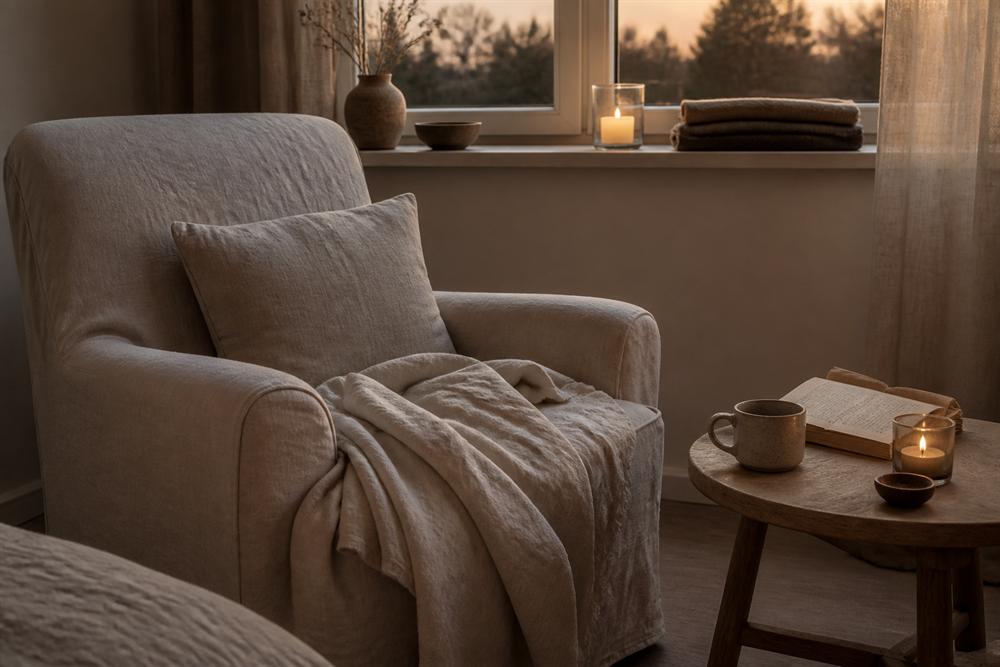
Switch off harsh overhead lighting when it is not needed and use several lower sources instead. A table lamp, wall light or carefully placed candle creates smaller pools of light that make a room feel settled.
Keep candle safety practical: use stable holders, leave space from curtains and textiles, and never leave a flame unattended. The ritual matters more than the number of candles.
Layer natural materials
Linen, wool, timber, stone and ceramics bring visible texture without requiring bold decoration. A linen cushion, soft throw and breathable bedding can make a room comfortable while remaining useful.
Choose a restrained palette and vary texture rather than filling the room with themed accessories. Natural flax, warm white, muted brown and soft grey are easy foundations. If you are planning a sewn home project, compare linen for soft furnishings before choosing a weight.
Create a place to pause
A hygge corner does not need to be separate room. Give one chair good light, a small surface for a cup and somewhere to place a book or handwork. Remove objects that interrupt the use of the space.
Comfort is personal. Some people want a deep chair and blanket; others prefer a clear table beside a window. Design around the activity rather than copying a styled photograph.
Make simple rituals repeatable
Hygge becomes meaningful through repetition: setting the table for an ordinary supper, airing the bedroom before making the bed, sharing tea after a walk or putting phones away for an hour.
Keep the ritual easy enough to repeat. A perfectly arranged room that creates more work is unlikely to feel restful. Use washable textiles, keep frequently used objects accessible and let the home show signs of real life.
Share comfort with other people
Togetherness is central to hygge. Invite people in without turning the visit into a performance. Simple food, comfortable seating and attention are more important than elaborate presentation.
Hygge can also be solitary. Reading, sewing, bathing or resting quietly can create the same sense of being present and cared for.
Frequently asked questions
Is hygge only for winter?
No. Winter makes warmth and light especially noticeable, but hygge can describe any calm, comfortable and connected moment throughout the year.
Do I need Scandinavian furniture?
No. Hygge is an atmosphere and way of using a space, not a shopping list or prescribed interior style.
Which fabrics work in a hygge home?
Natural, tactile and useful fabrics such as linen and wool work well. Choose appropriate weights and washable finishes for the way each textile will be used.