
What Color Is Natural Linen? Oatmeal, Beige and Grey
Updated August 8, 2026
Quick answer: Undyed linen is usually a soft neutral between ivory, oatmeal, beige and grey. Its exact shade varies with the flax crop, retting, weave and finish. Bleached linen is lighter, while dyed linen can be produced in almost any colour.
Linen fabric comes from the flax plant, an ancient flowering crop that thrives in the damp, cool conditions of Norther Europe. Flax has been cultivated for thousands of years for its fiber that's used to make linen clothing, textiles, rope and many many more everyday items. The flax flower is a blue-purple color – but does that mean that the final linen fabric will be this color?
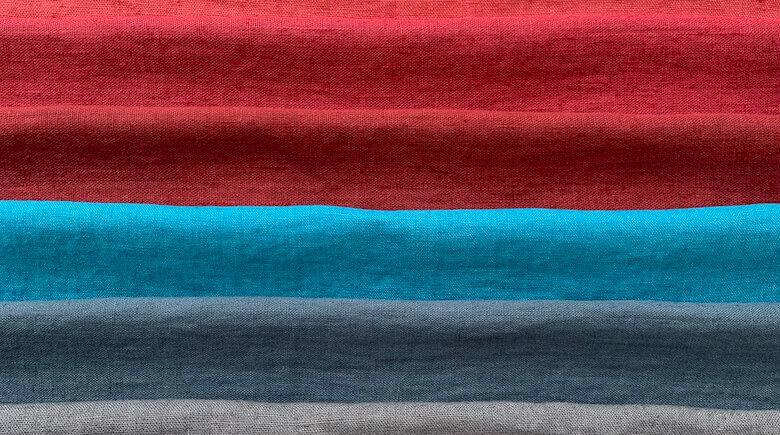
The answer is 'No'. The natural color of undyed linen is known as 'linen gray'. This isn't a uniform tone, however, as the color will vary according to how the flax crop has been grown and processed. In its natural state, woven linen fabric tones range from ivory, beige, oatmeal and ecru.
Discover what causes these different tones, and how linen is dyed:
Why does linen color vary?
The color of the processed linen depends on the conditions in which it was produced. Factors from time of harvest to drying conditions will affect the color of the finished fabric. If the flax is harvested early the processed natural linen color will have a greeny-yellowish tone. A green tinge can also be the result of soil that's high in nitrogen, or a very early harvest before the plant is fully ripe. If the flax is harvested late the natural shade will be a warm brown. During the processing stages, flax is soaked in water, and the temperature can affect the final color – colder water will give the fiber a blueish hint.
So, even in undyed linen you'll find variations in its natural tones.
What color linen fabrics are available?
Many people love undyed linen color for its rustic, natural feel. It's perfect for linen bedding, summer clothing, light curtains and bathroom towels. Undyed linen is also antimicrobial and anti-allergenic, so after a few washes it will feel super soft and comfortable against your skin.
But if you're after a different look – maybe pops of bold colors, darker moody gray or bright white – you'll need to search for dyed linen. You can even get black linen fabric, which makes perfect floaty dresses or tote bags as you don't need to worry about marks.
Good quality flax fiber takes color well, meaning there's a huge range of shades and colors available. When you shop for colourful or natural linen make sure you buy from a reputable retailer, to make sure the dyes used haven't damaged the flax fiber or that bleach hasn't harmed the natural strength and resilience of the fabric.
How is linen dyed different colors?
Early Medieval people dyed linen with woad, but modern dyeing methods use a combination of ancient and new technologies. Just as our ancestors did, before linen fabric is dyed it is washed, scoured to remove any debris, soil or oils and then treated with a range of direct dye, reactive dye and sulphur dye in a neutral or alkaline bath.
Direct dyes don't need any additional chemicals to fix them to the fiber and produce bright colors. This means they don't damage the flax fibers in the linen fabric.
For white fabrics, bleach is used to strip out the natural color and create a clean, pristine finish.
So, that's how your beautiful sparkling white linen table cloth or rich plum toned cushion covers goes from field to production to shop, and finally to your home. Thanks to its natural resilience and durability, even bleached or dyed linen fabric lasts for years. Which means you can keep enjoying your natural, colorful or clean white linen textiles.
To keep your linens looking their best, follow the care instructions on the garment as some dyes may not be as fast as others. If in doubt, wash in cool water and hang dry. Find out more about linen care here.
Natural linen colours at a glance
Unbleached linen is not one fixed colour. Depending on the flax, retting, spinning, weave and finishing, it may look creamy ivory, oatmeal, flax beige, taupe or grey-beige. The familiar term linen grey describes this family of soft neutral shades rather than a universal standard.
Why the same linen looks different at home
Texture scatters light, so a coarse weave can appear deeper than a fine weave in the same dye. Warm bulbs emphasise beige and yellow undertones; cool daylight brings out grey or blue undertones. Screen settings and photography also shift colour. For upholstery, curtains or several matching pieces, check a physical linen sample in both daylight and evening light, and order enough from one dye lot.
Natural, bleached and dyed linen
Natural linen retains the flax-inspired neutral colour. Bleaching creates white or pale bases, while piece dyeing can produce almost any shade. Yarn-dyed fabrics use coloured yarns before weaving and are common in checks and stripes. A washed finish changes the surface and can make colour look softly faded without necessarily changing the fibre itself.
How to choose a linen colour
For an easy-to-layer interior, start with natural, white or muted earth tones. Strong colours can be excellent accents, but assess fade exposure near sunny windows. Colour is only one part of the decision: compare weight, opacity, drape and weave using our guide to choosing linen fabric.
Frequently asked questions
What is the natural colour of linen?
Unbleached linen is not one fixed colour. It commonly falls between ivory, oatmeal, beige, taupe and soft grey. The exact shade depends on the flax crop and how the fibre, yarn and finished cloth were processed. That natural variation is part of linen’s character rather than a defect.
Why can two natural linen fabrics look different?
Flax growing conditions, retting, fibre selection, yarn thickness, weave and finishing can all change the final tone. Texture also affects how light is reflected, so a coarse open weave may look darker than a smooth fine linen made from similarly coloured fibre. Screens and room lighting introduce further differences.
Does natural or dyed linen fade?
All textiles can change with repeated washing and strong sunlight. Natural linen usually softens and develops a gentler surface over time, while deep dyes may gradually lose intensity. Follow the care label, avoid unnecessary optical brighteners and compare a physical linen sample in the room where the fabric will be used.