

Wild Swimming for Beginners: How to Start Safely and Slowly
Updated August 12, 2026
Quick answer: Start wild swimming at a known, permitted location with local guidance, suitable conditions and another person present. Enter gradually, keep the first swim short and prepare warm, dry layers for immediately afterwards.
Safety note: Open water can involve cold shock, currents, poor visibility, water-quality problems and changing weather. Check official local advice and never treat general online guidance as a substitute for location-specific safety information.
With the ever-increasing pace of modern life, many of us are turning to the outdoors as a way of slowing down and enjoying simpler pleasures. Wild swimming is becoming an increasingly popular way to connect with Nature and enjoy a different way of being outside. We thought we'd see what all the fuss is about.
What is wild swimming?
The loose definition of wild swimming is any open water swimming, whether a lido or an ocean, but different people have different takes on the precise requisite for a stretch of water to be classed as 'wild'. Basically, if you are under the sky, not a roof, you are wild swimming.
Who does it?
Anyone, from the young to the old, can wild swim, as long as you can swim safely. People of all ages have enjoyed splashing about in rivers, paddling in the sea or doing laps in the local lido for centuries - perhaps even as long as humankind has been walking we have been playing in water.
Why do it?
There are many benefits to be had from swimming in cool, open water:
-
A sense of adventure
-
Connection to Nature and the rhythm of the water, which can help you unwind and relax
-
Cold water swimming burns more calories than swimming in warm water
-
Boosts immune system
-
Lifts the spirits as it raises endorphins
-
Seawater has been used as a therapy for centuries (thalassotherapy)
-
Boosts circulation and makes you feel alive
-
Allows us time to play and slow down
-
Relieves muscle aches
-
It's free (usually)!
How do I swim wild?
Safety is paramount when swimming in open water, especially if there are no lifeguards present or you are in an isolated area. The Outdoor Swimming Society website has a brilliant section all about how to stay safe, so make you check it, or something similar, out before you set off. You also need to check whether you are permitted to access a particular stretch of water, and what the water quality is like.
What do I need?
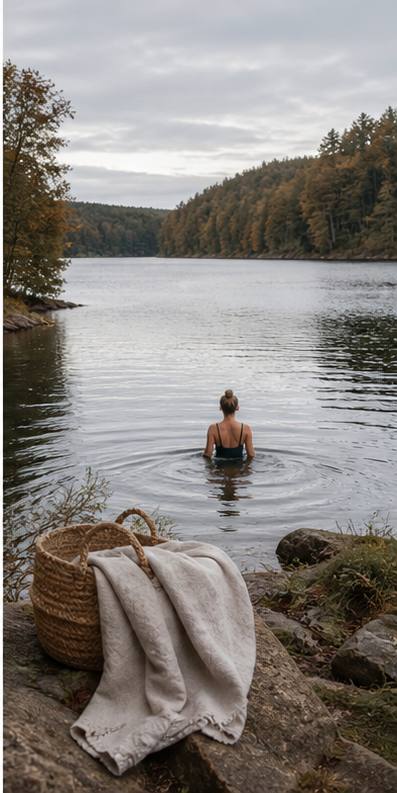
It's sensible to take someone with you in case you get into trouble, but you really don't need much kit. For very cold water you might want a wetsuit, but you can just take a decent towel (something lightweight and highly absorbent that is easy to carry). A flask of hot drink to warm you up is useful. A woolly blanket makes a great warmer-upper and later it can be somewhere you can stretch out on to enjoy the peace and the tingly feeling of having swum outdoors. For safety, a mobile phone and first aid kit is a good idea.
For more information
-
Read: Waterlog by Roger Deakin; Watermarks: An anthology edited by Tanya Shadrick; the Outdoor Swimming Society's website; Swell by Jenny Landreth; Leap In by Alexandra Heminsley
-
Watch: The Invincibles; Lake Swimming Vacations USA; Swim Fast Masterclass in open water conditions
-
For more on how to enjoy summer without it costing the earth, click here, and for more on simple living read this.
Frequently asked questions
Is wild swimming safe for beginners?
It can be approached more safely with a supervised or well-established location, local knowledge, suitable conditions and gradual exposure, but open water always carries risk.
What should I take for a first wild swim?
Bring suitable swimwear, visible headwear where appropriate, easy-to-put-on warm layers, footwear, a towel, water and any location-specific safety equipment.
How long should a beginner stay in cold water?
There is no universal safe duration. Conditions and individual responses vary, so start very briefly, leave before you feel impaired and follow qualified local advice.