
A Short History of Bed Linen: From Flax Sheets to Modern Bedding
Updated August 10, 2026 — expanded into a researched overview of how bed linen developed from household luxury to everyday bedding.
Bed linen has changed with the way people sleep, build homes and produce textiles. The phrase once referred literally to sheets and coverings made from flax linen. Today it is a general term for sheets, pillowcases, duvet covers and other washable layers around a bed, even when they are made from cotton or another fibre.
This history focuses on bedding as a household object. For the separate story of turning flax into cloth, read how linen is made.
Early beds and the first washable layers
Ancient sleeping arrangements varied greatly by place and status. People used raised frames, mats, animal skins, plant material and woven cloth. In households able to own fine textiles, a removable cloth layer made a bed more comfortable and easier to keep clean. Linen was valued because flax fibres could produce cloth that was smooth, strong and washable.
Surviving textiles are rare because fabric deteriorates, so the history of everyday bedding is pieced together from inventories, art, archaeological fragments and written household records. These sources tell us more about wealthy homes than ordinary ones, but they show that bedding was both practical property and a sign of status.
Bed linen in medieval households
In medieval Europe, beds and their textiles were among a household’s valuable possessions. A substantial bed could include a mattress, sheets, blankets, coverlets, curtains and decorative hangings. Clean white linen signalled careful household management as well as wealth because growing flax, preparing fibre, spinning yarn, weaving cloth and laundering large sheets all required labour.
Textiles were repaired and reused rather than discarded casually. Worn sheets could be cut down into smaller household cloths, children’s bedding or dressings. This long life helps explain why linen became associated not only with comfort but also with thrift and household order.
From household production to specialised trade
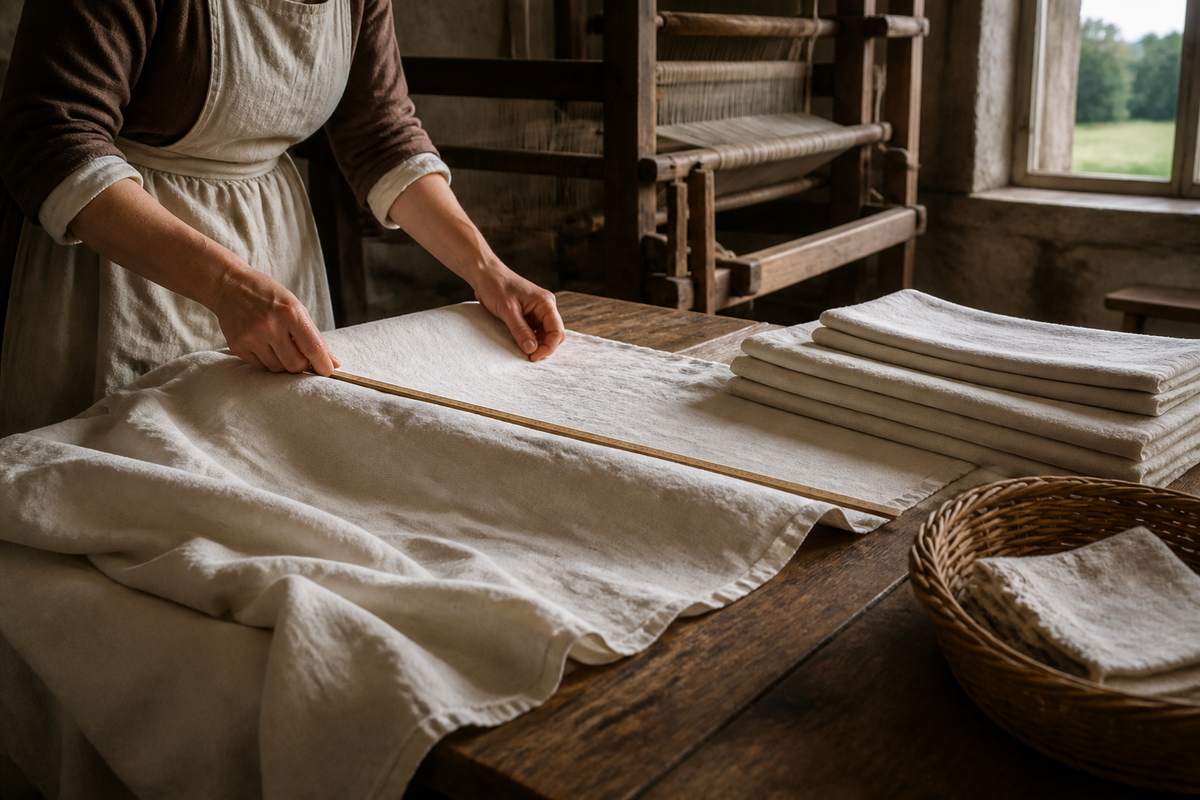
For centuries, textile preparation took place across farms, cottages and workshops. Spinning and sewing were common domestic skills, while professional weavers and finishers supplied cloth at different grades. Regional linen trades developed around suitable flax-growing conditions, water, craft knowledge and market access.
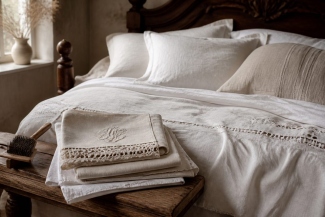
Families often accumulated bedding gradually. Sheets might form part of a dowry or household trousseau and could be marked with initials to identify ownership. Hemstitching, drawn-thread work and embroidery added beauty, but they also demonstrated the maker’s skill.
Industrialisation and more widely available bedding
Mechanised spinning, weaving and sewing transformed textile production during the eighteenth and nineteenth centuries. Cotton became increasingly important in European bedding as industrial manufacture and international trade made it more widely available. Linen continued to be valued for durability and handle, while machine production reduced some of the labour involved in creating cloth.
Standardisation came slowly. Mattress and bed dimensions varied, and many sheets were still made or altered at home. Ready-made bedding expanded as urban retail, factory production and more consistent bed sizes developed.
The arrival of modern sheets and duvet covers
Flat sheets are simple rectangles and have existed in many forms for centuries. Fitted sheets became practical mass-market products later, once elastic and standard mattress sizes allowed fabric to grip the corners. Our guide to types of bed sheets explains the modern differences.
Duvets and removable duvet covers also changed daily bed-making. A washable cover protects the filled duvet and can reduce the number of separate layers needed. Adoption differed by country, climate and custom, which is why some households still prefer a top sheet while others use only a fitted sheet and duvet cover.
Why white became a classic bed-linen colour
White bedding made cleanliness visible and could be boiled or treated more aggressively than many dyed fabrics. In institutions and affluent homes, crisp white linen conveyed order and hygiene. Modern laundering no longer requires every sheet to be white, but the association between pale bedding, freshness and calm interiors remains strong.
Bed linen today
Modern buyers can choose from pure linen, cotton, blends and manufactured fibres in many weaves and finishes. Priorities now include comfort, breathability, ease of care, durability, traceability and visual style. Linen bedding retains a distinctive place because it combines a long textile tradition with a relaxed appearance that suits contemporary interiors.
The most useful lesson from bed-linen history is longevity: sheets were once valuable possessions maintained through washing, mending and repurposing. Choosing suitable fabric and caring for it well can still extend bedding life today.
Frequently asked questions
Why are sheets and pillowcases called bed linen?
The term comes from the historical use of flax linen for washable household textiles. It now describes the category even when an item is made from another fibre.
When did fitted sheets become common?
Fitted sheets became widespread in the twentieth century as elastic materials, factory production and standard mattress sizes made them convenient to manufacture and use.
Was linen bedding always white?
No. Undyed, bleached, dyed and decorated textiles all existed. White became strongly associated with cleanliness because it showed marks clearly and tolerated traditional laundering methods.