
How to Organize a Linen Closet: Storage That Stays Tidy
Updated August 11, 2026
A tidy linen closet should make daily life easier, not create another display to maintain. The best system is simple enough for everyone in the household to use and protects clean textiles from damp, dust and unnecessary handling.
Start with what you own, how often it is used and where each item is needed. Then give every category a clear, breathable place.
Empty, clean and assess the space
Remove everything and vacuum shelves, corners and ventilation gaps. Wipe surfaces with a barely damp cloth and let the cupboard dry completely before returning textiles. Check for leaks, condensation, pests or a persistent musty smell; organization will not solve a moisture problem.
Measure shelf depth and height. Deep shelves often need baskets or dividers so smaller items do not disappear behind large stacks.
Sort by use, not just by fabric type
Group complete bedding sets by bed size, towels by bathroom or user, and table linen by table shape or occasion. Put everyday items at eye level and occasional pieces higher up. Keep cleaning cloths and household supplies separate from bed and table textiles.
If you repeatedly avoid an item because it is damaged, uncomfortable or the wrong size, repair, repurpose or responsibly pass it on rather than storing it indefinitely.

Set realistic quantities
Many homes work well with two or three bedding sets per bed: one in use, one clean and perhaps one spare. Your ideal number depends on laundry frequency, children, guests and storage space. The goal is enough resilience without unstable towers.
For table linen, keep pieces that fit the tables and occasions you actually host. Store sentimental textiles separately with a note about their history and care.
Fold and contain consistently
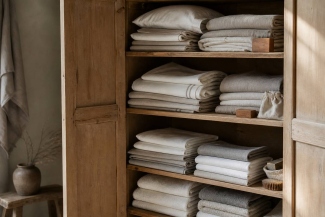
Fold similar items to the same shelf depth. Store each duvet cover with its matching pillowcases, or place a complete set inside one pillowcase. Use breathable baskets for small napkins, guest towels and cloths; avoid sealed plastic if it could trap residual moisture.
Simple labels help other people return items to the correct place. Label categories, not every individual object.
Protect linen between uses
Wash and dry textiles fully before storage. Avoid heavily perfumed products that can transfer scent or leave residues. Cedar blocks or lavender sachets may be used nearby if appropriate, but keep oils from touching fabric.
Rotate stacks occasionally so the same fold is not compressed for years. Our guide to keeping bed linen fresh covers care between washes.
Frequently asked questions
How many sheet sets should I keep per bed?
Two or three sets per bed suit many households, but laundry frequency, guests and accidents may change the practical number.
Should linen be stored in plastic boxes?
Breathable storage is usually preferable in a dry cupboard. Sealed plastic can trap moisture if textiles are not completely dry.
How can I stop a linen closet smelling musty?
Address damp or poor ventilation first, store only fully dry textiles and clean the cupboard regularly.