

How to Make Your Own Refreshing Botanical Spritz
Updated August 10, 2026
A botanical spritz is a simple way to bring a fresh, natural scent into a room, onto linen or into a warm-weather routine. The important first step is deciding what the spray is for. A linen mist and a facial mist need different ingredients and should never be treated as interchangeable.
Below are three straightforward recipes: a lightly scented linen water, a gentle botanical facial mist and a calming bedtime linen spray. Make small batches, use clean bottles and label every mixture with its purpose and date.
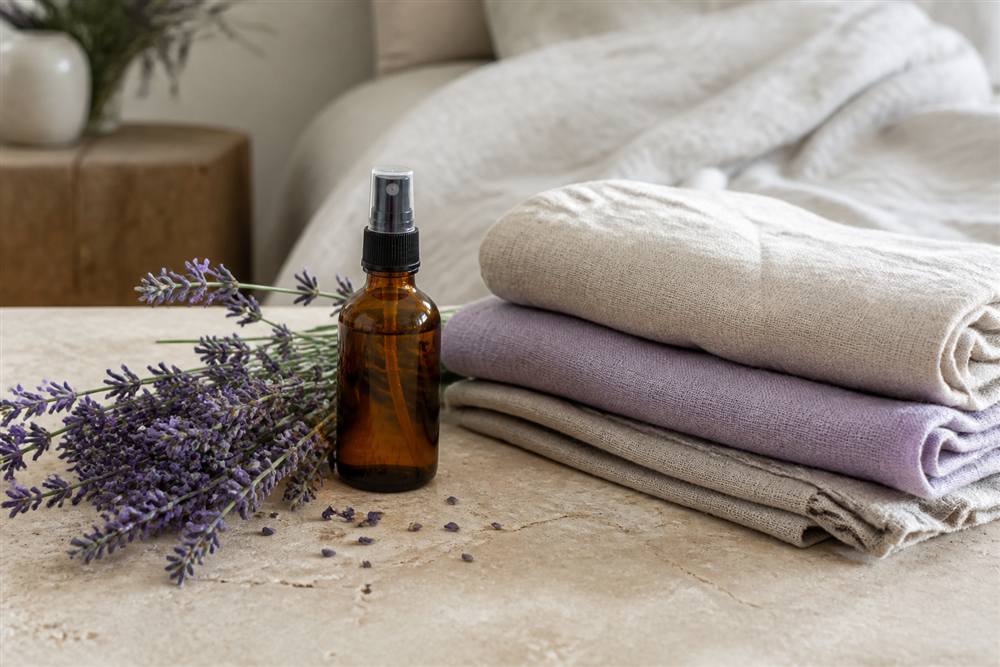
Before you mix: simple safety rules
- Use a thoroughly washed and dried glass spray bottle.
- Choose distilled water or a cosmetic hydrosol, not water that has been sitting open.
- Make small, fresh batches. Water-based mixtures without a tested preservative are not suitable for long storage.
- Label the bottle clearly and keep it away from children and pets.
- Never spray towards eyes, faces, polished furniture or delicate surfaces.
- Patch-test both fabrics and skin products before wider use.
Lavender linen water
This light linen spray can be used sparingly on washable household linen. It is not a skin mist. Add 100 ml distilled water and one teaspoon of high-proof, unflavoured alcohol to a clean bottle. Add 6–8 drops of lavender essential oil, close the bottle and shake well before every use.
Mist from a distance onto an inconspicuous area first. Allow the fabric to dry fully before use, and avoid silk, leather, upholstery with special finishes and anything whose care label discourages sprays. For a softer scent, reduce the essential oil rather than adding more water to an old batch.
A gentler botanical facial mist
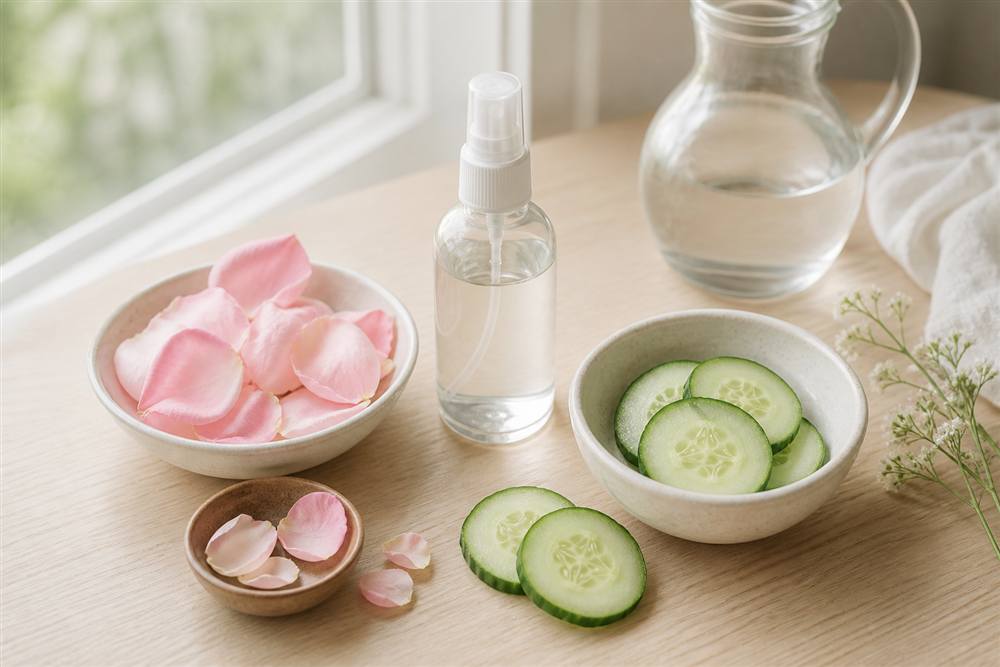
For a facial mist, the simplest option is a commercially prepared cosmetic-grade rosewater or another hydrosol specifically labelled for skin use. Pour a small amount into a clean travel-size mist bottle, refrigerate if the product instructions require it, and follow the original use-by guidance.
Do not add undiluted essential oils to water and spray the mixture on your face. Oil and water separate, so a concentrated droplet can land directly on the skin. If your skin is sensitive, patch-test the hydrosol first and stop using it if irritation occurs.
A calming bedtime linen mist
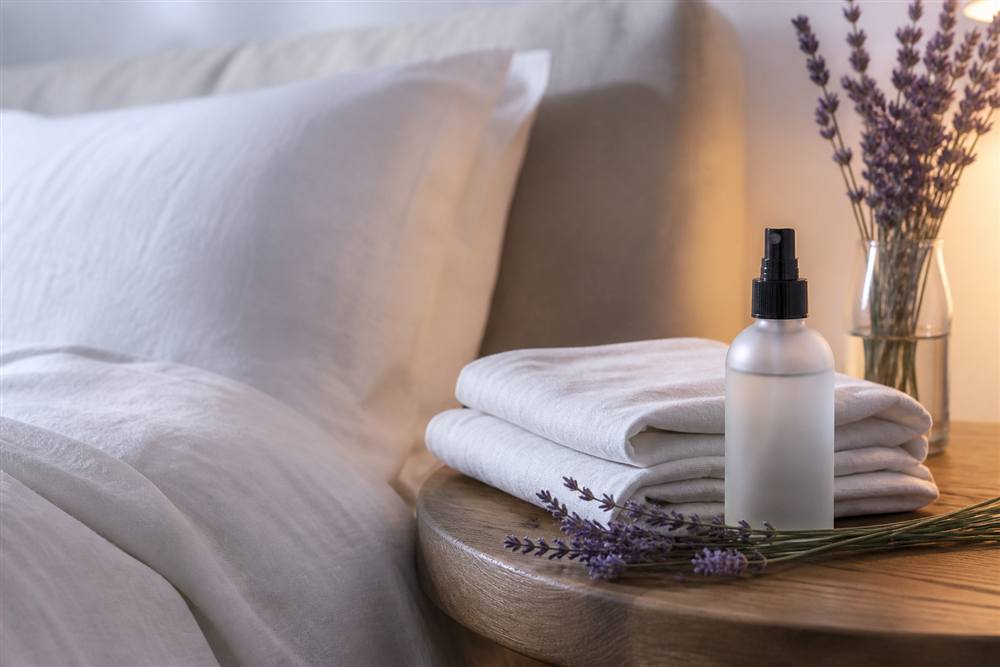
Use the lavender linen-water recipe above, but make the scent especially subtle: 3–4 drops of lavender essential oil per 100 ml is often enough. Shake, mist lightly over the top layer of bedding from a distance and let it dry completely before bedtime. Never spray directly onto a person or pet.
A scent can become part of a relaxing evening ritual, but it is not a treatment for insomnia. Pair it with fresh air, a comfortable room temperature and clean bedding. Our guide to how often to change your sheets offers a practical starting point for bed-linen care.
How to store a homemade spritz
Keep bottles out of direct sunlight and heat. If a mixture changes colour, develops cloudiness or smells different, discard it. Wash the bottle before making a new batch rather than topping up an older one. For facial products, follow the storage directions supplied with the cosmetic ingredient and do not extend its original expiry date.
Frequently asked questions
Can I use linen spray on every fabric?
No. Check the care label and test an inconspicuous area. Avoid delicate fabrics and specialist finishes unless the manufacturer confirms that a spray is suitable.
Can essential oils be mixed with water for a facial mist?
Not safely without a properly formulated cosmetic solubiliser and preservative system. A cosmetic-grade hydrosol used according to its label is the simpler option.
How long does a homemade botanical spray last?
It depends on the ingredients and storage. Make small batches, date them and discard any mixture that changes in appearance or smell. Water-based DIY sprays are not designed for long-term storage.