

Why Women’s Clothes Need Better Pockets
Updated August 11, 2026
A pocket is a small construction detail with a large effect on how clothing works. It can hold keys, support a relaxed posture or remove the need for a bag, but only if it is deep, secure and positioned without distorting the garment.
Women’s clothing has often treated pockets as decorative or omitted them altogether. Better design considers function from the pattern stage.
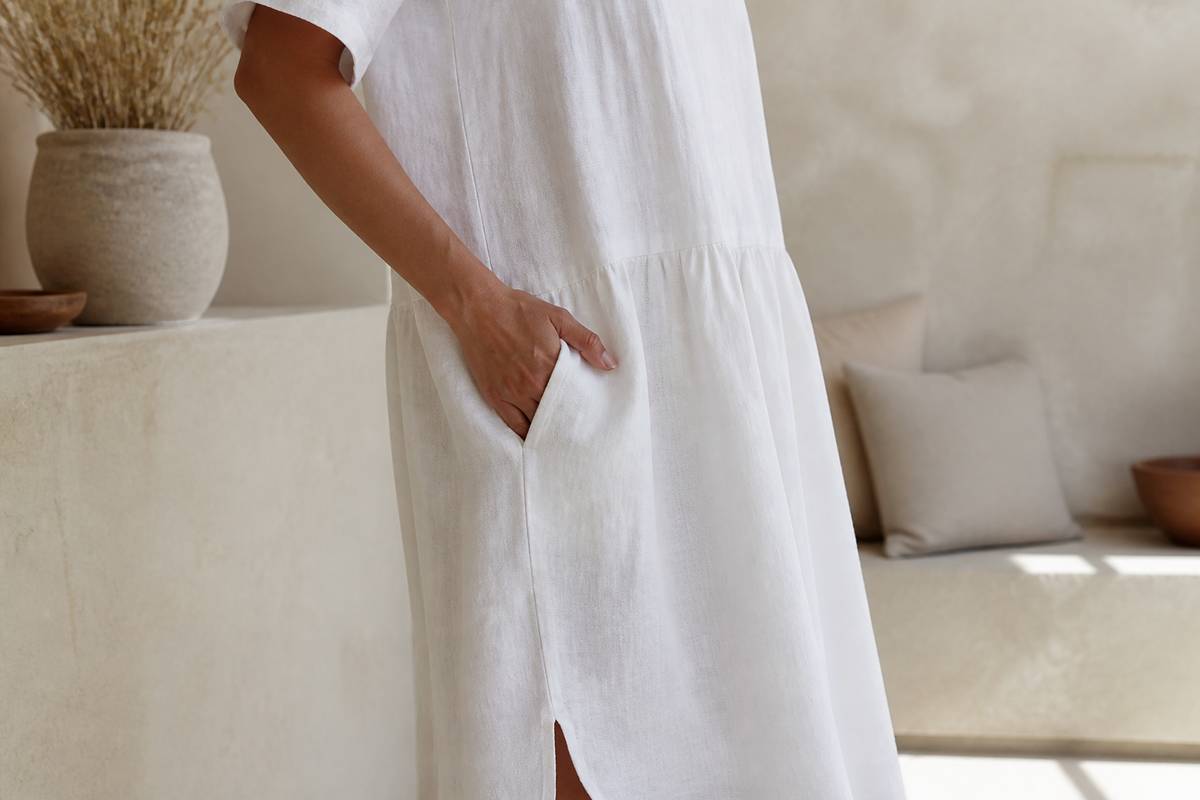
What makes a pocket genuinely useful
A useful pocket fits a hand and the objects the wearer realistically carries. The opening should be easy to find, while the pocket bag needs enough depth that a phone or keys do not fall out when sitting.
Test pockets while walking, sitting and bending. A pocket that works only when standing still is not practical.
Placement changes fit and silhouette
Side-seam pockets are discreet but can gape if placed too low or made too bulky. Front patch pockets are strong and visible; angled trouser pockets are easy to access but need stable openings. The best choice depends on garment shape and fabric weight.
In a soft linen dress, the pocket bag should be light enough to preserve drape but strong enough for use. Understitching, bar tacks and reinforced opening ends improve stability.
Why false and tiny pockets persist
Manufacturers may remove pockets to simplify production or preserve a smooth sample silhouette. Very tight garments also offer little space for a pocket bag. These are design choices, not reasons that functional pockets are impossible in all women’s clothes.
Clear demand matters: check product descriptions, ask about dimensions and support makers who show pockets in use rather than merely listing them.
How to assess pockets before buying
Put your whole hand inside and check whether the opening pulls. Place the object you usually carry in the pocket, then sit down. Look for strain at seams, visible lining and imbalance between sides.
For online purchases, seek garment measurements, fabric weight and photographs showing the pocket. If sewing, test the placement in a muslin before cutting the final linen clothing fabric.
Adding pockets to an existing garment
A skilled sewer can add patch pockets to many loose garments or replace a shallow pocket bag. Side-seam additions are more involved and may affect fit. Match fabric weight, reinforce stress points and accept that an alteration may be visible.
Frequently asked questions
What is the best pocket type for a linen dress?
A well-positioned side-seam or patch pocket can work well. The choice depends on dress shape, fabric weight and desired visibility.
How deep should a clothing pocket be?
It should securely hold the wearer’s hand and intended objects during sitting and movement; there is no single depth for every garment.
Can pockets be added after a garment is made?
Often yes, especially patch pockets. Side-seam pockets may require more complex alteration and can affect fit.