
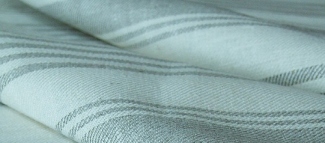
Types of Linen Fabric: Weaves, Weights & Best Uses
We all love linen fabric for its natural beauty and versatility, but did you know there are different types of linen fabric? Produced from the fiber of the flax plant, linen is beloved for its softness, natural origins, durability and strength, as well as its antifungal and antibacterial properties. There are various linen fabric types, distinguished from each other by the texture and weave pattern.
Updated July 28, 2026: refreshed with clearer guidance on linen fabric types, uses and sample ordering.
Quick answer: linen fabric types vary by weave, weight and finish. Plain weave is versatile for clothing and home decor, loose weave is lighter and more open, damask is decorative, and towelling is absorbent for towels and kitchen textiles.
When choosing linen by the yard, match the fabric type to the project first: lighter linen for clothing and curtains, stronger weights for upholstery and cushions, and absorbent weaves for towels or kitchen textiles. Ordering linen fabric samples helps compare handle, opacity, texture and colour before committing to a larger order.
Linen fabric types at a glance
| Type or construction | Typical character | Common uses |
|---|---|---|
| Plain-weave linen | Balanced, versatile construction | Clothing, curtains, cushions and general home textiles |
| Damask linen | Decorative reversible pattern | Table linen and formal decorative textiles |
| Loose or open-weave linen | Airy, more transparent structure | Sheer curtains and decorative layers |
| Huckaback or towelling linen | Textured and absorbent | Towels, tea towels and spa textiles |
| Sheeting linen | Wider, smooth cloth | Bed linen and large home-textile panels |
| Heavy upholstery linen | Dense and stable | Furniture, benches and robust cushions |
These names describe construction or intended use, not a universal performance grade. Weight, density, finish and supplier test information still need to be checked for the exact project.
Weave, weight and finish are different
- Weave is the way the yarns are constructed and affects texture, stability and drape—for example plain weave, twill, herringbone or an open weave.
- Weight describes the fabric's mass and body. Compare the supplier's specifications and order samples because the same named construction can be offered in different weights.
- Finish, such as washed, pre-washed or crisp, changes the handle and appearance but is not itself a weave.
For clothing, compare weight, opacity and drape. For curtains, consider openness and how much light the fabric transmits. For upholstery, check stability and the supplier's stated performance specifications as well as colour and handle.
Types of linen fabric
-
Damask linen fabric is woven on a jacquard loom, using a mix of plain and satin weaves. The fibers are usually flat and reversible, which gives damask fabric a smooth texture with a reversible pattern. To make the design and pattern stand out, damask usually comes in one color and is often used for linen napkins, linen tablecloths, linen table runners and other home textiles. A variation of damask is a Venise linen fabric. It is very finely textured and characterized by large floral patterns.
-
Plain-woven linen fabric is also called 'glass toweling' because of its most common use – wiping glassware. This fabric typically has a checkered or striped pattern of red or blue or both on a white background. This type of linen fabric has a loose weave that makes it more absorbent and better suited for cleaning purposes, but also slightly less durable. Another variation of plain-woven fabric is Holland linen, which is treated with oil and starch, making it opaque and hard for the sunlight to penetrate. It is used to make window shades and lampshades because of its light-blocking properties. Cambric linen is also a type of plain-woven linen fabric and is probably the thinnest, finest variety of linen fabrics. It gets its name from Cambria, France, where it was first produced. Typically it's used to make delicate garments like handkerchiefs and lingerie. Butcher's linen is a type of strong plain-weave linen which is stiff, coarse and commonly used for heavy-duty clothing such as aprons.

-
Loosely woven linen fabrics are designed to be highly absorbent. They are commonly used for diapers and sanitary towels. One of the varieties of loosely woven fabrics is Bird's Eye linen, which is characterized by small geometric patterns that are reminiscent of a bird's eye. Another variety is called huckaback linen fabric and is often produced from a pure linen or blend of cotton and linen. It is usually woven in towel lengths, making it perfect for highly absorbent yet lightweight bathroom linens. Loosely woven Art linen is produced from hand-twisted yarns and is very smooth.
-
Sheeting linen is a heavy fabric and is usually made wide so it can be used to manufacture sheets. It is also a lovely fabric for suits, dresses and other linen clothing.
-
Toweling is the name for all the types of linen that are used to produce towels. It comes in different sizes, and the versatile towels that are made can be used for a wide range of purposes.
Linen fabric is considered luxurious because processing it from the flax plant is a time-consuming, effortful procedure. The end products – whatever the type of linen fabric – are beautiful, durable and timelessly appealing.