
Hotel Linen Fabric: How to Choose Textiles for Hospitality
Updated August 11, 2026
Hotel linen must do more than look inviting. In a busy hospitality setting, fabric has to support a consistent guest experience while coping with frequent use, professional laundering, replacement cycles and the practical demands of housekeeping.
This guide focuses on choosing linen fabric for boutique hotels, guest houses and serviced accommodation. It covers specification and sampling rather than duplicating our consumer guides to bed-linen care.
Start with the exact hotel application
List where the fabric will be used before comparing colours. Bed runners, curtains, decorative cushions, table linen and upholstered seating place very different demands on a cloth. A lightweight linen that drapes beautifully at a window may not be stable enough for a chair; a dense upholstery fabric may be too heavy for a relaxed tablecloth.
Create a room-by-room schedule with the finished item, dimensions, expected use, cleaning method and required quantity. This makes supplier conversations faster and reduces expensive substitutions later.
Specify performance as well as appearance
Ask for fabric weight, usable width, fibre composition, shrinkage guidance, colourfastness and the recommended cleaning method. Upholstery projects also need appropriate abrasion and seam-performance information. For curtains, discuss opacity, lining, light exposure and whether the fabric must meet local contract or fire-safety requirements.
Natural variation and slubs are part of linen's character. Agree an acceptable visual standard with the maker so staff do not mistake normal texture for damage.
Plan for laundering and housekeeping
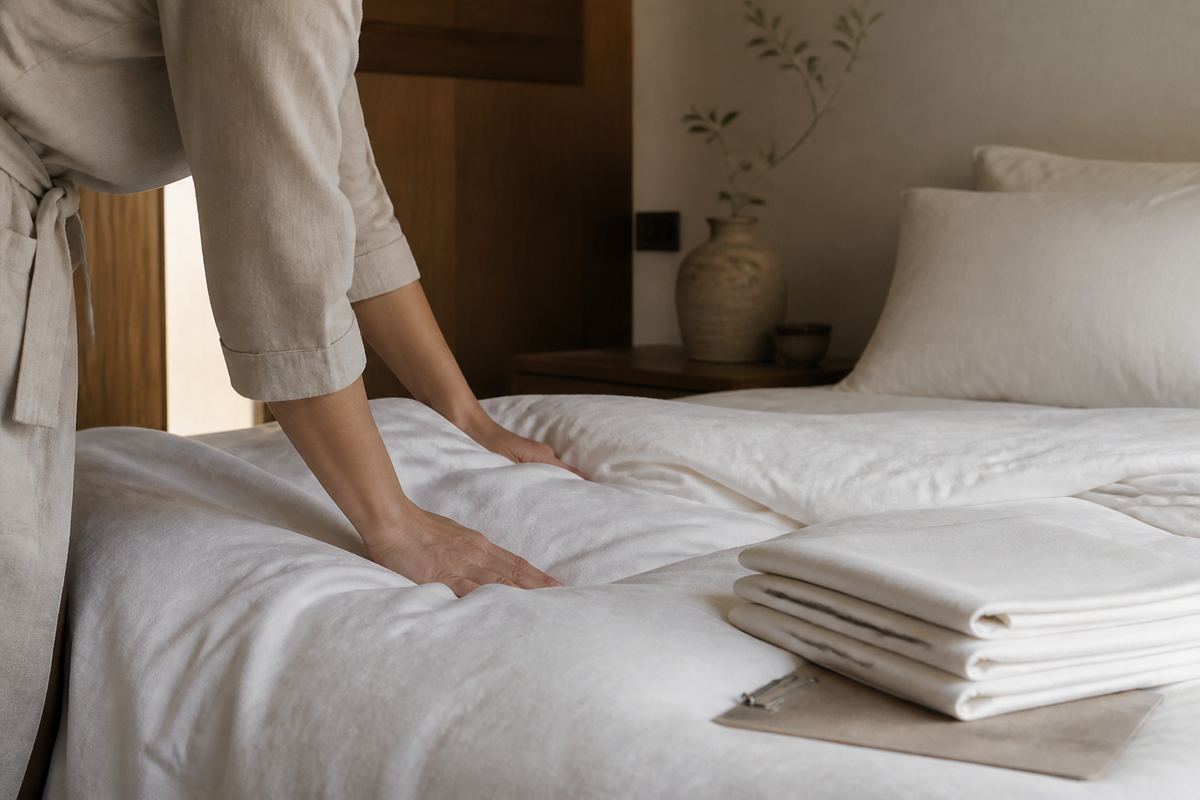
A washable item is only operationally useful when its care instructions match the hotel's equipment and workflow. Test a finished sample through the intended wash and drying process, then record shrinkage, colour change, pressing time and drying time. Avoid changing temperature or chemistry without checking both the fabric supplier and laundry specialist.
For removable items, use construction details that housekeeping can handle efficiently: practical closures, clear size identification and spare stock stored by room type.
Build a calm, coherent palette
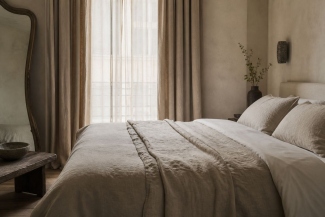
Hospitality interiors benefit from a small family of repeatable colours rather than many near-matches. Natural flax, warm white and stone are flexible foundations; muted accents can distinguish room types without making replenishment difficult. Check every sample in the actual room during daylight and artificial light.
Texture can carry much of the design. A plain weave, herringbone or softly washed finish can add depth without relying on short-lived patterns.
Order samples and calculate replacements
Use the relevant soft-furnishing linen fabrics and upholstery linen fabrics as starting points, then order samples before confirming yardage. Ask the curtain maker, upholsterer or sewing workroom to calculate repeats, hems, seams and pattern placement.
Keep approved sample references, dye-lot information and a small repair reserve. When future continuity matters, ask what can realistically be reordered and build a phased replacement plan instead of assuming a colour will remain identical forever.
Frequently asked questions
Is pure linen suitable for hotels?
It can be suitable when the fabric and construction match the application. Contract requirements, care, durability and housekeeping workflow should be checked before ordering.
What weight of linen should a hotel choose?
There is no single hotel weight. Curtains, table linen, bedding details and upholstery require different weights and performance specifications.
Should hotels wash a sample before placing an order?
Yes. Test the fabric or finished prototype using the intended laundry process and record shrinkage, appearance and handling time.