
Is Linen Good for Upholstery? Pros, Cons and Best Uses
Updated August 16, 2026
Quick answer: is linen good for upholstery?
Yes—linen can be an excellent upholstery fabric when the cloth is designed for furniture and matched to the way the piece will be used. It offers natural texture, breathable comfort and a relaxed appearance. Its trade-offs are visible creasing, variable stain resistance and care requirements that depend on the particular fabric and finished cover.
For an occasional chair, headboard or removable cover, linen may be a straightforward choice. A busy family sofa needs closer attention to weave stability, abrasion performance, colour, construction and cleaning instructions. Order a linen fabric sample before committing to a large quantity.

The advantages of linen upholstery
- Natural character: slubs, fine creases and subtle colour variation give linen an informal, tactile look.
- Comfort: linen usually feels dry and breathable against the skin, making it pleasant for upholstered seating.
- Strong fibre: flax fibre is naturally strong, although finished-fabric durability still depends on yarn, weave, weight and finish.
- Design versatility: linen works with contemporary, country, coastal and traditional interiors.
- Ageing potential: a suitable cloth can develop an attractive patina rather than needing to look perfectly crisp.
The disadvantages to consider
- Creasing: linen does not recover from pressure like a highly elastic synthetic cloth.
- Possible movement: a loose or lightweight weave may stretch or distort on frequently used seats.
- Variable cleaning: some removable covers are washable, while fixed upholstery or treated fabrics may require professional cleaning.
- Sunlight sensitivity: strong daylight can fade many dyed textiles, including linen.
- Spill performance: untreated linen should not be assumed to repel stains; prompt blotting and the specified care method matter.

Which furniture suits linen upholstery?
Linen can suit sofas, armchairs, dining chairs, benches, ottomans, headboards and cushions, but the specification should change with the application. Decorative pieces can use a wider range of weaves. Seat cushions and family furniture need a stable upholstery-grade cloth and sound construction.
Removable covers are useful when the maker confirms that the fabric can be cleaned that way. Fixed upholstery may look more tailored but can require professional care. For a closer look at abrasion testing, read how to interpret Martindale rub counts.
Is linen suitable for homes with children or pets?
It can be, but lifestyle matters more than a simple yes or no. Choose a colour and texture that can tolerate visible everyday use, confirm the care method, and ask about abrasion, pilling and colourfastness information. Claws can catch open or highly textured weaves, while very pale flat colours may show marks quickly.
A tightly woven sample is worth testing at home. Handle it, rub it gently with a clean cloth and view it in the room where the furniture will sit. Do not perform stain or wash tests unless you have a spare swatch and understand that the result applies only to that sample.

Pure linen versus a linen blend
Pure linen gives the clearest expression of flax fibre and its characteristic texture. A blend may be engineered to change softness, resilience, stability, cost or care. Neither is automatically better for upholstery: compare the complete fibre composition, fabric construction, available test data and recommended end use.
If natural-fibre content is important, read the specification carefully. A fabric described informally as “linen look” may contain little or no flax, while a genuine linen blend should disclose its component fibres.
What performance information should you check?
Ask the supplier or upholsterer which information is available for the exact fabric:
- recommended use, such as fixed upholstery, loose covers or decorative applications;
- abrasion resistance and any pilling or seam-slippage results;
- lightfastness and colourfastness;
- professional-cleaning, spot-cleaning or washing instructions;
- fabric width, pattern repeat and direction; and
- any fire-performance documentation required for the country and setting.
Laboratory results help compare materials, but they cannot predict an exact lifespan. Cushion filling, seam placement, direct sunlight, pets and maintenance all affect the finished furniture.
Choose colour and texture for the room
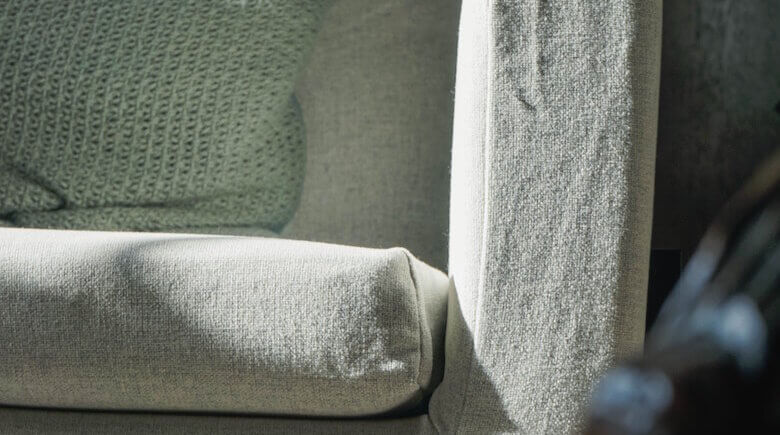
Natural, oatmeal and stone shades highlight linen’s texture and combine easily with timber, wool and leather. Mid-tones, melange effects and patterns may conceal everyday marks better than very pale solid colours. Large furniture often has a longer visual life in a versatile tone, while a small chair or cushion can carry a stronger colour or pattern.
View the sample in morning and evening light and beside the room’s existing materials. Also consider how direct sunlight reaches the furniture. Screens cannot reliably show the final colour, handle or opacity of a textile.

How to care for linen upholstery
Vacuum gently with an upholstery attachment and blot fresh spills with a clean absorbent cloth. Avoid vigorous rubbing and unapproved household cleaners. Follow the instructions for both the fabric and the finished furniture because backing, lining, trims and cushion construction can change what is safe.
Never assume a cover is machine washable simply because it is linen. Washing an unsuitable cover can cause shrinkage, colour change or loss of fit. Our linen upholstery cleaning guide explains the routine in more detail.
When linen may not be the best choice
Consider another specification if you want a perfectly smooth, crease-free surface; cannot accommodate the prescribed cleaning method; or have an application that exceeds the fabric’s documented performance. A commercial venue may also have regulatory and durability requirements that differ from a private home.
The best upholstery is not the fibre with the longest list of claims. It is the material whose appearance, construction, care and verified performance fit the actual project.

Frequently asked questions
Is 100% linen durable enough for a sofa?
It can be when the exact fabric is upholstery grade and suitable for the sofa’s level of use. Fibre percentage alone is not enough; check construction, performance information and the supplier’s recommended application.
Does linen upholstery stain easily?
Stain behaviour varies with colour, weave and finish. Untreated linen should not be described as stain-proof. Blot spills promptly and use only the cleaning method specified for the fabric and finished furniture.
Will linen upholstery always wrinkle?
Some creasing is part of linen’s natural appearance. A dense weave, suitable lining and well-fitted construction can reduce excessive movement, but linen will not behave like a highly elastic synthetic fabric.
Should I choose pure linen or a blend for a family sofa?
Choose from evidence rather than fibre name alone. Compare weave stability, abrasion and pilling information, care instructions, sample feel and the supplier’s recommended use for each option.
Next step: compare linen with cotton, velvet and synthetic upholstery, check the Martindale abrasion guide, or browse linen upholstery fabrics.