
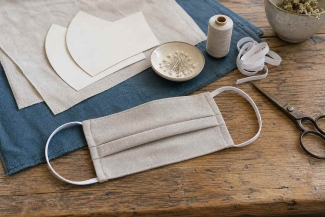
How to Sew a Reusable Linen Face Covering
Updated August 11, 2026
A reusable fabric face covering can be a satisfying small sewing project, but it should not be treated as medical protective equipment. Requirements and public-health advice change, so follow current guidance from your local health authority and use certified protection whenever it is required.
The method below focuses on basic construction, fit and laundering. Do not make coverings for someone who cannot remove one independently or where a face covering is unsafe.
Choose a suitable fabric
Use clean, washable, tightly woven fabric that remains comfortable when layered. Linen can provide breathability and strength, but very open decorative linen is unsuitable. Hold the fabric to light: large visible gaps indicate a loose weave.
Pre-wash and dry the cloth according to its future care routine. This removes finishing residues and accounts for initial shrinkage before cutting. If buying fabric, order samples and test breathability through the planned number of layers.
Gather tools and make a pattern
You will need pre-washed fabric, matching thread, scissors, pins or clips, a ruler, paper and elastic or fabric ties. Use a reputable pattern sized for the wearer and check its seam allowance before cutting.
Cut carefully on grain so the finished covering does not twist. Mark the top edge and any pleat lines on the wrong side with a removable fabric marker.
Sew the layers
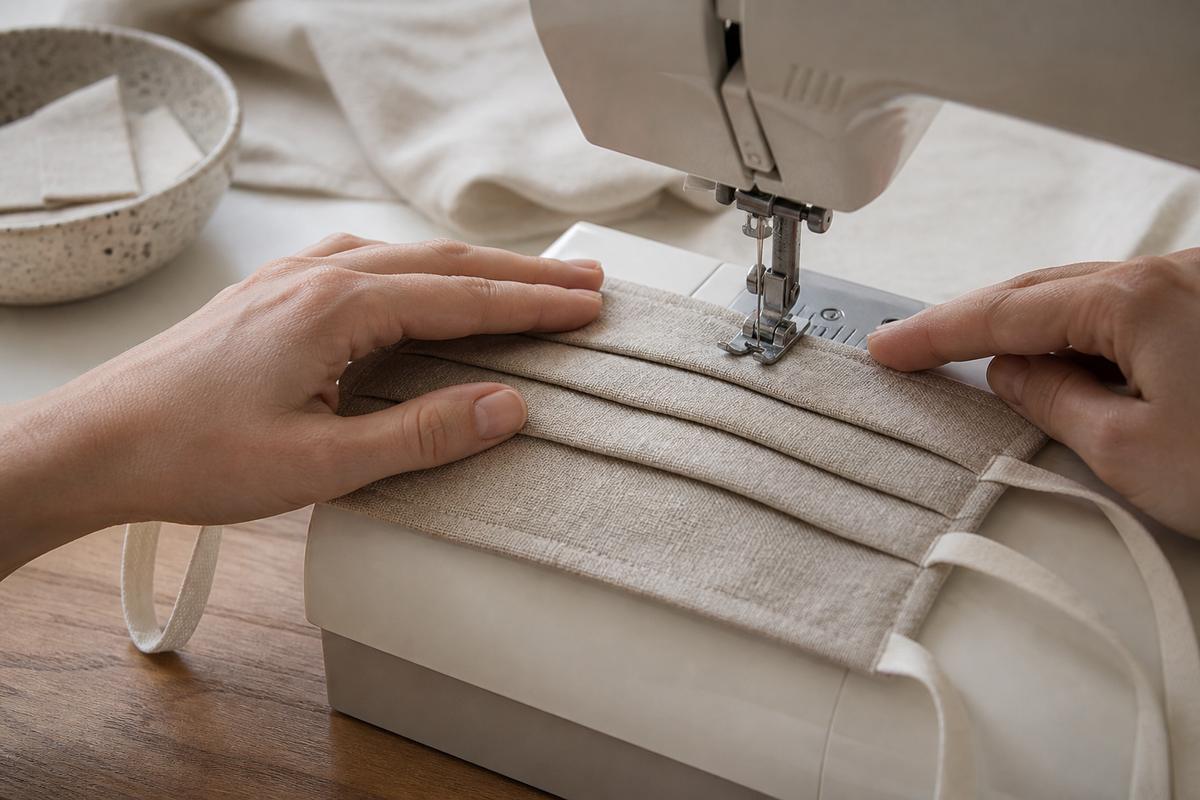
Place fabric pieces with the appropriate sides together, then stitch the long edges using the pattern's seam allowance. Turn, press gently and topstitch if the instructions require it. Form evenly spaced pleats or darts so the covering can follow the face without large side gaps.
Secure elastic in side channels or attach fabric ties firmly. Backstitch at stress points. Avoid pins left inside channels and trim loose threads before fitting.
Check fit and comfort
The covering should sit over nose, mouth and chin without restricting breathing or vision. It should remain in place during normal speech and head movement. Ear loops must not pull painfully, while ties should be long enough to secure without trailing dangerously.
If glasses fog heavily or the sides gape, adjust the pattern or fastening. Do not add unverified valves or rigid parts that could compromise the intended use.
Wash after use
Handle a used covering by its loops or ties and wash it according to current health guidance and the fabric's care label. Use a clean, dry replacement rather than wearing damp fabric. Let every layer dry completely before storage.
Inspect seams, elastic and fabric regularly. Retire the covering if it is damaged, permanently misshapen or difficult to breathe through.
Understand the limitations
A homemade fabric covering is not a respirator and does not replace ventilation, staying home when ill, vaccination or other measures recommended by health authorities. For healthcare, hazardous dust or legally regulated settings, use approved protective equipment.
Frequently asked questions
Is a linen face covering medical protective equipment?
No. A homemade fabric covering is not a certified respirator or medical device. Follow current local health guidance.
Should linen be pre-washed before sewing?
Yes. Pre-washing removes finishes and allows initial shrinkage to occur before the pieces are cut.
How many layers should a reusable face covering have?
Use the number and construction recommended by current local guidance and a reputable pattern, while ensuring the wearer can breathe comfortably.