
Linen Craft Ideas: Plan Useful Projects with Fabric Offcuts
Updated August 11, 2026
Linen offcuts are too useful to discard, but a successful craft begins with the size, weight and condition of the cloth. A fine blouse remnant behaves differently from sturdy upholstery linen, so match the material to the job before choosing a tutorial.
This article is a planning hub for practical projects rather than a duplicate of individual sewing instructions.
Sort and prepare the fabric
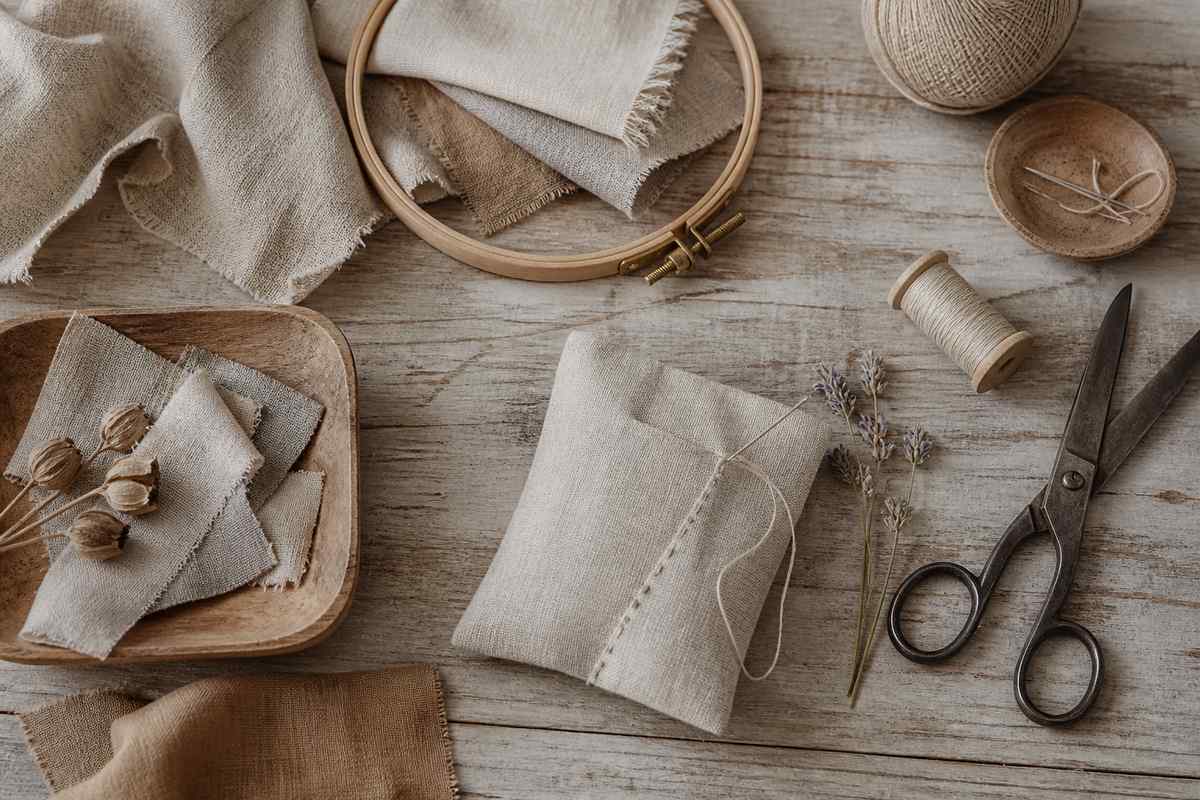
Group remnants by fibre content, weight, colour and usable size. Remove dusty edges and check for stains, fading or weak areas. Wash cloth according to the future care routine before cutting so shrinkage does not distort the finished project.
Press gently and square the grain where precision matters. Keep very small clean pieces for stuffing only when the project can be laundered safely.
Choose a project that suits the weight
Light and midweight linen works for napkins, drawstring bags, sachets, simple patches and fabric wrapping. Heavier stable cloth suits coasters, placemats, baskets with appropriate interfacing, or visible repairs on similar-weight textiles.
Avoid using loosely woven decorative linen where strength or food hygiene is important. Order linen samples if you need to compare weights before a larger project.
Five useful linen-offcut ideas
- Hem four squares as everyday cocktail napkins.
- Sew a small drawstring bag for cables or travel items.
- Make a lavender sachet with a secure inner pouch.
- Create matching patches for worn linen garments.
- Use a larger remnant as reusable gift wrapping.
Mark seam allowances clearly and test stitch length on a scrap. Linen can fray, so use a clean enclosed seam, zigzag or overlock finish appropriate to the project.
Work accurately and safely
Use sharp fabric scissors, suitable needles and pins or clips. Keep tools away from children and count pins before finishing. Press seams as you work, using heat and steam appropriate to the cloth.
If the item will touch food, skin or a baby's environment, choose washable materials and avoid loose embellishments, fragrances or finishes that are not suitable for that use.
Use the finished object often
A craft is most sustainable when it replaces a real need and survives repeated use. Include care instructions when gifting. Save an offcut with fibre and washing details for future repairs.
Frequently asked questions
What can I make with small linen scraps?
Small scraps can become patches, sachets, napkins, coasters or details on larger projects, depending on their weight and condition.
Should linen be washed before crafting?
Yes when the finished object will be washable. Pre-washing accounts for shrinkage before cutting.
How do I stop linen edges fraying?
Use an appropriate enclosed seam, zigzag, overlock or narrow hem, and test the finish on a scrap first.