

Linen Fabric Terms Explained: Huckaback, GSM, Stonewashed and More
Updated August 10, 2026 — expanded into a practical glossary of linen terms used in fabric descriptions and product specifications.
Buying linen becomes easier once you can translate the vocabulary on a fabric listing. Terms such as huckaback, stonewashed, GSM and yarn-dyed describe different things: weave, finishing, weight or colour construction. They should not be treated as interchangeable quality grades.
This guide defines the language. For advice on matching a fabric to a project, use our separate guide to choosing linen fabric.
Pure linen
Pure linen means the textile’s fibre content is entirely flax linen. It does not tell you the weight, weave, softness, origin or suitability for a particular use. Confirm the composition on the technical specification rather than relying on appearance.
Linen blend
A linen blend combines flax with another fibre such as cotton or viscose. The percentage of each fibre should be stated. Blending can change drape, softness, crease behaviour, strength and care, so compare the actual composition rather than assuming every blend performs alike.
Fabric weight and GSM
GSM means grams per square metre. It describes how much one square metre of fabric weighs, not its width or thread count. Lower-GSM linen is generally lighter; higher-GSM linen is generally heavier, but weave density and yarn structure also affect opacity and handle.
- Lightweight: often considered for shirts, blouses, linings and airy curtains.
- Medium-weight: versatile for dresses, table linen, cushions and many soft-furnishing projects.
- Heavyweight: considered for upholstery, robust curtains, bags and structured projects.
These are working categories, not universal legal ranges. Always judge the sample and intended use.
Thread count
Thread count is the number of warp and weft threads within a stated area. It is widely marketed for bedding but does not measure quality on its own. Linen yarns are often thicker than fine cotton yarns, so a lower numerical count can still produce durable, comfortable cloth. Fibre quality, yarn, weave and finishing are equally important.
Plain weave
In plain weave, each weft yarn alternates over and under each warp yarn. It is a fundamental construction used for many linen fabrics. Plain weave can be fine or coarse, open or dense; the term describes the interlacing pattern rather than one exact appearance.
Huckaback linen
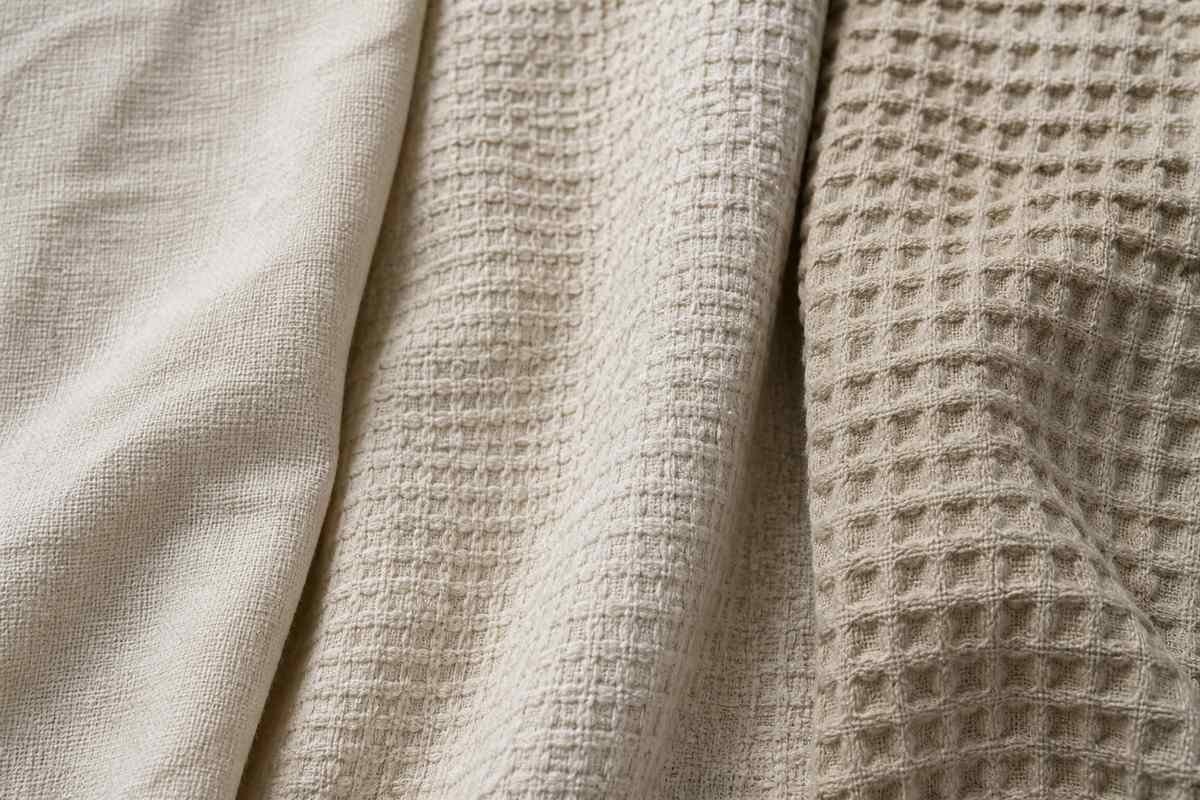
Huckaback is an absorbent weave with a characteristic textured surface. It has long been used for towels, hand towels and decorative embroidery. Texture and air spaces help make it practical for drying without requiring a thick terry pile. See our focused introduction to huckaback linen towels.
Waffle weave
Waffle fabric has a raised grid or honeycomb-like structure. The dimensional surface can increase absorbency and allows the textile to feel substantial without being uniformly dense. Waffle linen is used for towels, robes, throws and household textiles.
Stonewashed linen
Stonewashed describes a finishing process used to soften fabric and create a relaxed surface. Modern production methods vary, and the term does not necessarily mean literal stones were used. Stonewashing is a finish, not a fibre type or weave. Our article on what stonewashed linen means covers the result and uses.
Prewashed and garment-washed
Prewashed fabric has been washed or treated before sale to soften it and reduce later dimensional change. It can still shrink, so follow the supplier’s figures and prewash yardage before sewing when required. Garment-washed usually means the completed item was washed after construction.
Yarn-dyed and piece-dyed
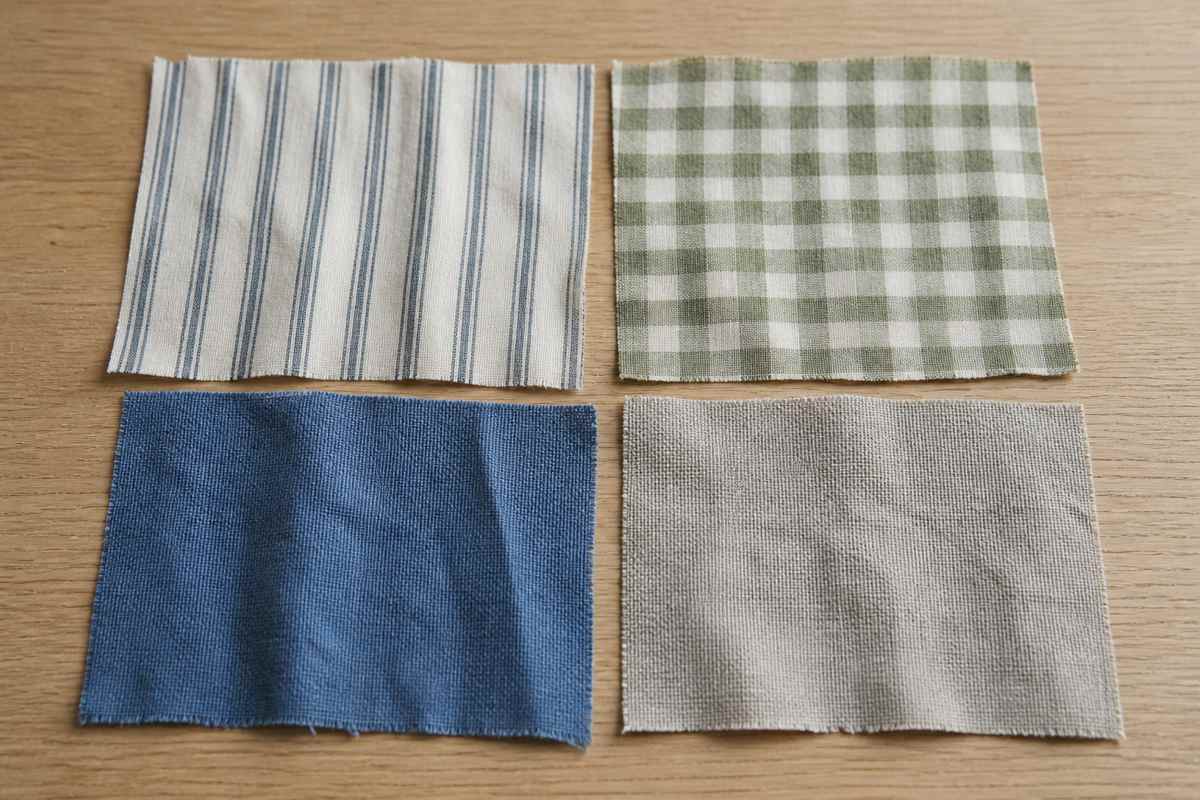
Yarn-dyed fabric uses yarn coloured before weaving. This method is common for gingham, stripes and checks because different coloured yarns create the pattern. Piece-dyed fabric is woven first and dyed as cloth, often producing a solid colour. Neither method is automatically superior; suitability and dye quality matter.
Melange
Melange describes a softly mixed or heathered colour created by combining fibres or yarns with slightly different tones. It gives visual depth without a distinct printed pattern.
Slub
A slub is a thicker place in a yarn that appears as a subtle irregularity in the cloth. Controlled slubs can contribute to linen’s character. They should not be used as the sole test of authenticity because other fibres can imitate the look.
Selvedge
The selvedge is the finished lengthwise edge formed during weaving. Fabric width is normally measured from selvedge to selvedge. The usable width may be slightly less if the selvedges are excluded from the cutting layout.
Martindale rating
Martindale is a laboratory abrasion test commonly referenced for upholstery fabric. A result helps compare resistance to rubbing under the stated test method, but it should be considered alongside seam strength, pilling, care, fire requirements and the demands of the setting.
Frequently asked questions
Is high thread count always better for linen?
No. Thread count alone cannot describe linen quality because yarn thickness, fibre quality, weave and finishing all affect performance.
Does stonewashed mean pre-shrunk?
Not necessarily. Stonewashing softens fabric and may reduce some dimensional change, but buyers should still follow the stated shrinkage allowance and care instructions.
What does linen GSM tell me?
GSM tells you the fabric’s weight per square metre. It helps compare light, medium and heavy options but does not by itself determine strength or suitability.
It sure was lovely when you mentioned that melange weave and how it uses a combination of different colored fibers to produce a lovely blended tone when finished. My brother will surely love this linen for his birthday since he loves several different colors at the same time. He made it clear that, for his birthday, he wants to see those colors. I think this is the only way we can make that happen. Hopefully, rentals have them.