
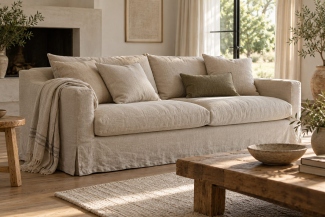
Best Linen Fabric for Washable Slipcovers
Quick answer: For most washable sofa and armchair slipcovers, choose a medium-to-heavy linen with a dense, stable weave and confirmed machine-washable care. A prewashed finish is particularly useful because it creates a softer handle and reduces—but does not completely eliminate—the risk of later shrinkage.
What weight of linen is best for slipcovers?
Fabric weight is a useful starting point. An occasional chair or decorative loose cover may suit linen around 270–340 gsm (8–10 oz), while an everyday armchair or sofa usually benefits from approximately 340–475 gsm (10–14 oz). For family seating, pets or frequent washing, look toward the heavier end of that range.
These figures are guidelines rather than strict rules. A tightly woven 340 gsm linen may perform better than a heavier fabric with a loose, unstable construction.
Heavy linen generally gives better coverage, resists abrasion and holds its shape around cushions. However, it must remain supple enough to follow the furniture’s contours. An extremely stiff upholstery fabric may be durable but difficult to remove, refit and wash at home.
Browse our linen upholstery fabrics to compare heavier constructions intended for furniture projects.
Choose a dense, stable weave
Hold a fabric sample up to the light and gently move it on the diagonal. For a slipcover, the threads should sit close together and the fabric should not distort too easily.
Plain weave, twill and herringbone linens can all work well:
- Plain weave creates a simple, timeless surface.
- Twill tends to feel flexible and may disguise everyday creasing.
- Herringbone adds subtle pattern and can help conceal minor marks.
Avoid loosely woven linen that pulls out of shape when handled. Open weaves may catch on jewellery or pet claws and can reveal the original upholstery underneath.
A stable weave is especially important around seat fronts, cushion corners, piping and zip openings, where the fabric is repeatedly placed under tension.
Is 100% linen suitable for washable slipcovers?
Yes. Pure linen is strong, breathable and naturally textured, making it an excellent choice for relaxed removable covers. It becomes softer with use and washing, and its gentle creases are part of its character.
A linen-cotton blend can also be suitable. Cotton may create a smoother feel and can make the fabric easier to sew, but performance depends on the actual weight, weave and finish—not simply the fibre percentages.
Whichever composition you choose, check that the manufacturer specifically permits the washing method you intend to use. “Upholstery fabric” does not automatically mean “machine washable”.
Why prewashed linen is a good choice
Prewashed or stonewashed linen is usually softer and more relaxed than untreated fabric. It is easier to drape and less likely to undergo a dramatic change during its first wash.
Nevertheless, prewashed does not mean completely shrink-proof. Linen can still change slightly when exposed to different temperatures, detergents or drying methods.
The safest approach is to prepare the fabric using the same method you intend to use for the finished slipcover. If the cover will be washed cold and air-dried, treat the uncut yardage in exactly that way before measuring and cutting.
Always perform a wash test
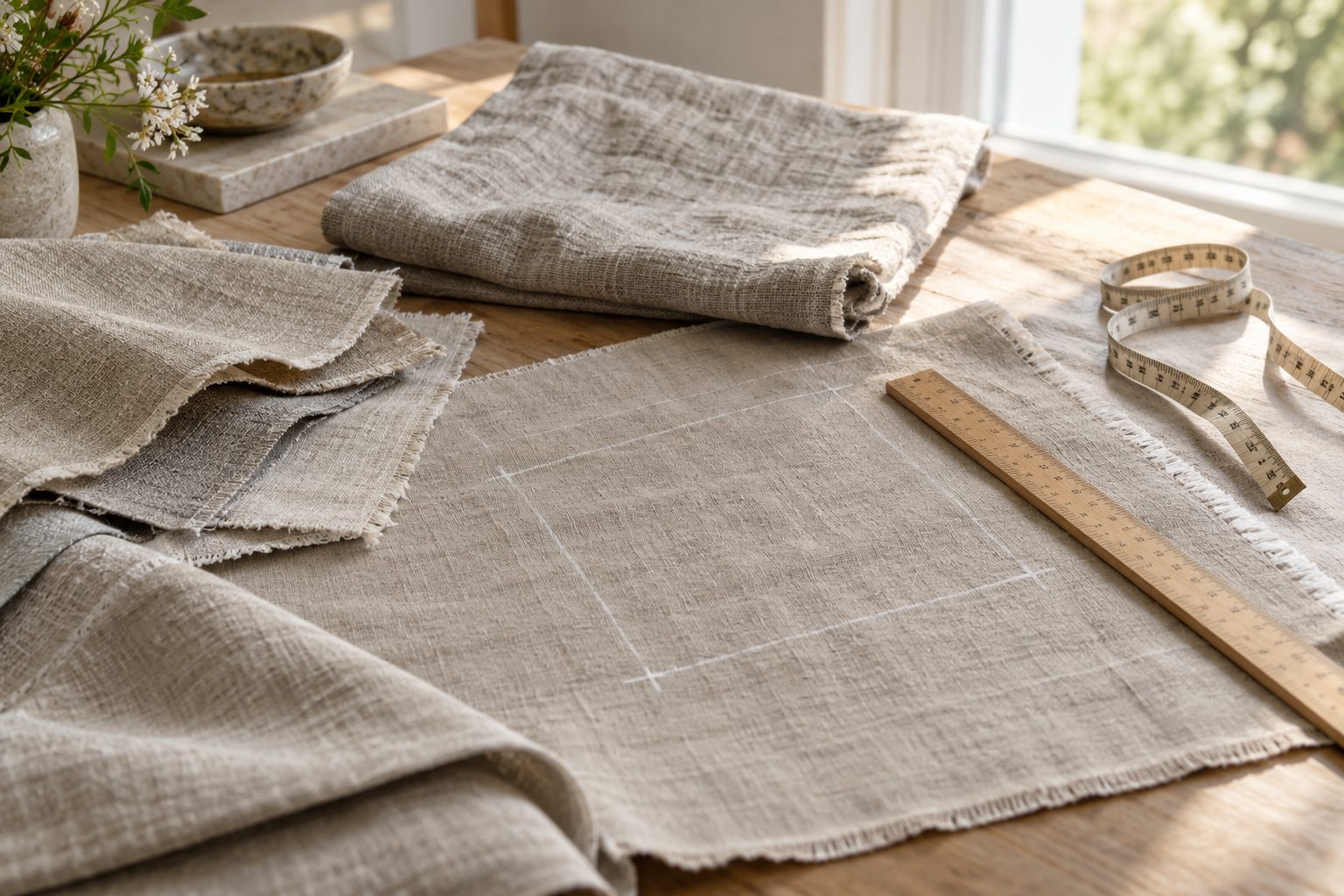
A wash test can prevent an expensive mistake. Before ordering all the fabric, obtain a sample large enough to test:
- Mark or stitch a measured square on the fabric.
- Record its dimensions before washing.
- Wash it using your planned detergent, cycle and temperature.
- Dry it in the same way you will dry the finished cover.
- Measure the square again.
- Check for shrinkage, colour change, skewing, puckering and changes in texture.
Also rub the damp sample against a clean white cloth to check colourfastness, particularly when considering a strongly dyed fabric.
Order linen fabric samples to compare weight, colour and texture in the room before committing to the full quantity.
How much shrinkage should you allow for?
Natural fibres can shrink, and the exact amount varies by fabric and finishing process. Some linen and cotton fabrics may change by several per cent during the first wash.
Prewashing the full length before cutting is more reliable than adding an estimated allowance to every pattern piece. It also reveals whether the fabric twists or changes handle during laundering.
If prewashing the full yardage is not possible, ask the supplier for documented shrinkage information and build a suitable allowance into the pattern. Never make a washable slipcover fit drum-tight before its first wash.
The best colours for practical slipcovers
Natural, flax, oatmeal, stone and mid-grey linens are forgiving choices for frequently used furniture. Their subtle variation helps disguise light creasing, dust and small marks.
White and pale linen create a fresh look and may be practical when the care instructions permit regular washing. Dark colours can look dramatic but may show lint, abrasion or fading more clearly, particularly in direct sunlight.
Before choosing a colour, view the sample in daylight and artificial light, against the original upholstery, beside the room’s flooring and wall colour, and again after completing your wash test. Remember that a pale or lightweight fabric may allow a patterned sofa underneath to show through.
What linen should you avoid?
For a washable slipcover, avoid:
- lightweight dress or sheer linen;
- loose, easily distorted weaves;
- fabrics marked dry-clean only;
- backed or coated upholstery materials;
- fabric without clear care information;
- very stiff material that cannot be removed easily;
- designs with a large repeat unless you have allowed extra fabric for matching.
A beautiful colour cannot compensate for the wrong construction. Start with wear, washability and stability, then choose the finish that suits the room.
Linen slipcovers for homes with children or pets
For busy family seating, choose a dense weave and a mid-tone colour or subtle pattern. A heavier fabric can offer better coverage and may be less likely to shift around the cushions.
No natural fabric is completely resistant to scratching. If pets regularly use the furniture, avoid very loose textures that can catch on claws.
Practical construction details can also extend the life of the cover. Consider separate removable cushion covers, zipped closures, replaceable arm protectors, reinforced seams at high-stress points and a small quantity of spare matching fabric for future repairs.
Plan the fit before ordering fabric
The best washable fabric will still disappoint if the slipcover is poorly planned. Decide whether you want a tailored fit or a more relaxed, loose-cover appearance before calculating the required yardage.
Record the fabric width and include allowances for seams, hems, piping, cushion depth, pattern matching and possible shrinkage. Our upholstery fabric yardage guide explains how to estimate fabric for chairs and sofas.
Keep the grain straight when positioning pattern pieces. If the fabric has stripes, herringbone or another directional design, buy enough to align the pattern across the front, sides and cushions.
How to wash a linen slipcover
Always follow the care instructions supplied with the specific fabric. In general, washable linen covers benefit from a cool or gentle wash, mild detergent, washing matching pieces together, avoiding an overloaded machine and using only the approved drying method.
Refitting a slightly damp cover can make it easier to smooth over the furniture, but only do this when it is consistent with the fabric and furniture maker’s instructions.
Wash all visible sections of the slipcover together. Washing one cushion cover repeatedly while leaving the others untouched can produce uneven colour and texture over time.
So, which linen is best?
For most washable slipcovers, the best choice is a dense, medium-to-heavy upholstery linen that is supple, prewashed and explicitly machine washable. For an everyday sofa, begin your search around 340–475 gsm, then assess the weave, drape and wash-test results rather than relying on weight alone.
Order samples before buying the full amount. Wash them exactly as you intend to wash the finished cover, view them against the furniture and choose the linen that offers the right balance of durability, comfort and relaxed character.
Frequently asked questions
Is linen strong enough for a sofa slipcover?
Yes, provided you choose a dense upholstery-grade linen suited to the expected level of use. Lightweight clothing linen is generally unsuitable for an everyday sofa.
Should I prewash linen before making a slipcover?
Yes. Prewash and dry the fabric using the same method planned for the finished cover. This allows most initial dimensional change to occur before cutting.
Is stonewashed linen good for slipcovers?
Stonewashed linen can be an excellent choice because it is soft, flexible and naturally relaxed. Confirm its weight, weave stability and care instructions before ordering.
Does linen wrinkle too much for a slipcover?
Linen creases naturally. A relaxed slipcover embraces this texture, while heavier linen and a carefully fitted pattern can create a neater appearance. Expect character rather than a permanently pressed surface.
Can linen slipcovers go in a tumble dryer?
Only if the fabric’s care instructions permit it. Heat can increase shrinkage, so test the intended drying method before cutting the main fabric.
Should a linen slipcover be lined?
Usually not. A sufficiently dense linen should provide suitable coverage on its own. Lining can complicate washing because the two fabrics may shrink at different rates.
Ready to compare suitable fabrics? Start with our fabric samples, then explore the full linen upholstery collection.