
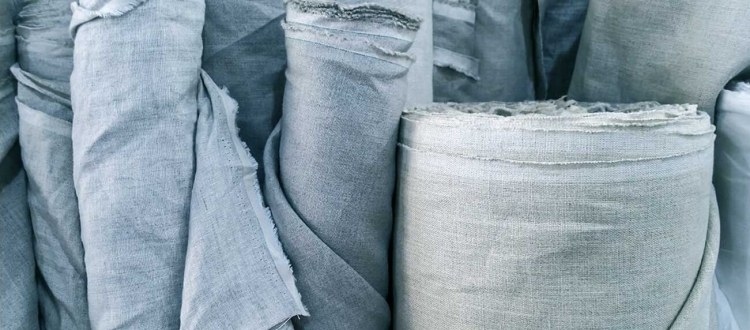
How to Buy Linen Fabric Online: A Practical Checklist
Updated August 10, 2026 — expanded with a practical online buying checklist covering samples, weight, width, shrinkage, colour and order planning.
Buying linen fabric online gives you access to more weights, weaves and colours than many local shops can display. The challenge is that a screen cannot fully communicate drape, thickness, texture or colour. A reliable purchase therefore begins with the technical specification and a physical sample—not only the product photograph.
This guide focuses specifically on remote purchasing. For deciding which linen construction suits a project, read how to choose linen fabric.
Start with the intended use
Write down what you are making and what the fabric needs to do. A summer shirt may require light weight and movement; curtains need suitable width, drape and light control; a frequently used chair needs abrasion resistance and stable construction. “Linen” alone is not a complete specification.
Note whether the project will be washed, exposed to strong sunlight, pulled under tension or used in a regulated commercial setting. These details change the questions you should ask the seller.
Read the fibre composition carefully
Look for a clear percentage. “100% linen” means flax linen, while a linen blend should list the other fibres and their proportions. Phrases such as “linen look” or “linen effect” describe appearance and may contain no flax at all.
Check fabric weight
Weight is often given in grams per square metre (GSM) or ounces per square yard. It helps distinguish a lightweight clothing linen from a heavier furnishing cloth, but it does not describe everything. Two fabrics of similar weight can differ in weave density, yarn thickness and drape.
Compare weights within the seller’s range and use the stated recommended applications as guidance. When in doubt, ask whether the fabric has been tested for your intended use.
Confirm usable width
Fabric is normally sold by length, but width determines how many pattern pieces fit across it. Check whether the quoted width includes selvedges and whether the pattern has a direction or repeat. Wide fabric can reduce seams in curtains, tablecloths and bedding, while narrow fabric may require joining panels.
Order samples before yardage
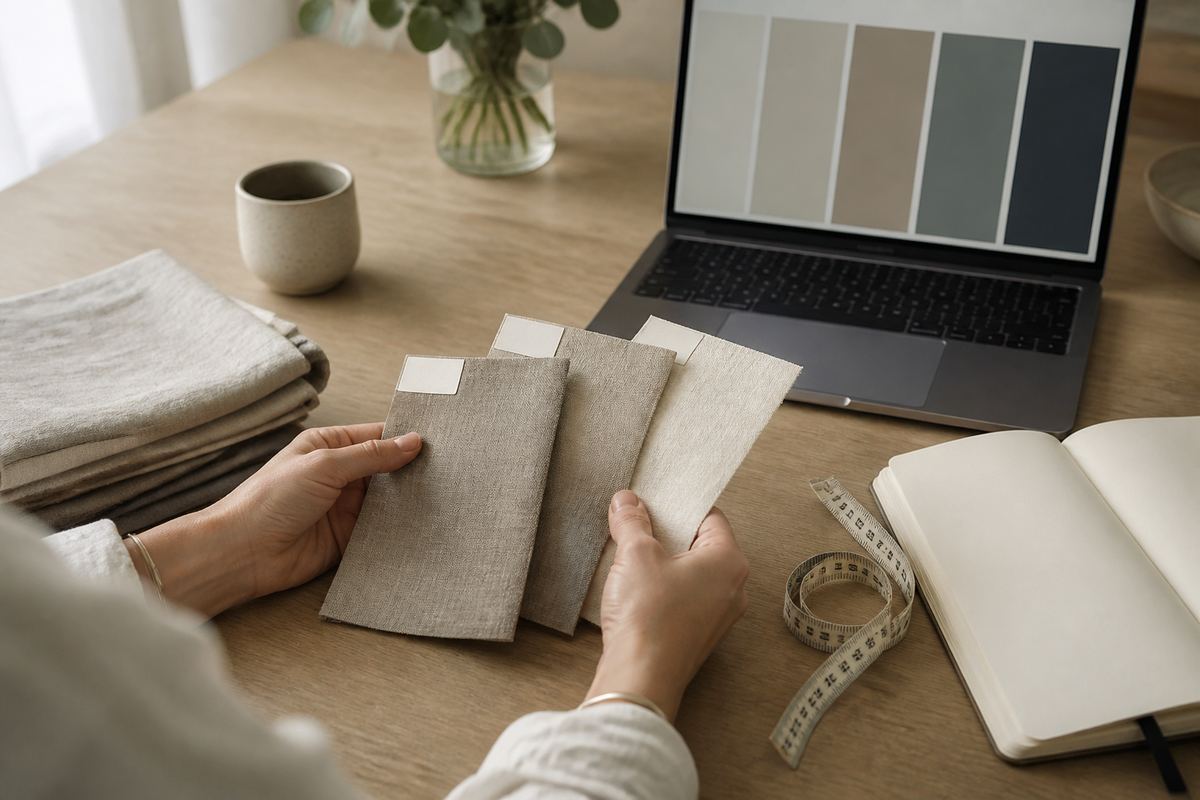
A sample is the best way to assess colour, opacity, surface, softness and scale. View it in the room and lighting where the finished item will be used. Place it beside paint, flooring, existing textiles or clothing.
For upholstery, pin or drape the sample over the furniture and observe it at different times of day. For clothing, hold it against the body and test how it gathers and folds. Browse available linen fabric samples before committing to a larger order.
Understand colour on screen
Displays, photography and room lighting all affect colour. Natural linen can range from pale oatmeal to deeper grey-brown depending on fibre, yarn and finish. Product names are helpful identifiers, not universal colour standards. A sample is essential when an exact match matters.
Check washing, finish and shrinkage
Find out whether the fabric is untreated, prewashed, softened or stonewashed. Prewashed linen may feel softer and show less later dimensional change, but it should not be assumed to have zero shrinkage. Read the stated allowance and prewash yardage before cutting when the project will be washable.
Calculate how much linen to buy
Use the actual fabric width, pattern layout, directional design and shrinkage allowance. Add enough for hems, pattern matching and cutting corrections. For multiple items, plan all pieces together so they can be cut efficiently from one length.
If colour consistency matters, order the full quantity at once. Separate dye lots can vary subtly. Keep a labelled offcut for future repairs or colour reference.
Evaluate the seller and product information
- Clear fibre composition, weight and width.
- Useful close-up and full-width photographs.
- Care and shrinkage guidance.
- Recommended applications and relevant test results.
- Sample ordering and transparent delivery information.
- A returns policy that explains how cut fabric is handled.
- Accessible contact details for technical questions.
Questions to ask before buying
Ask whether the cloth is suitable for washing, upholstery, curtains or commercial use as relevant. Confirm pattern repeat, rub-test data, fire-treatment status, stock continuity and maximum continuous length. Do not assume a domestic-use description meets contract or hospitality requirements.
When the fabric arrives
Check the parcel before cutting. Confirm colour, length, width, composition and visible condition. Unroll the fabric in good light and report a problem promptly according to the seller’s policy. Once satisfied, prewash if required and allow the textile to relax before laying out pattern pieces.
Frequently asked questions
Can I judge linen quality from a photograph?
No. Photographs help show colour and pattern, but weight, drape and handle should be assessed from specifications and preferably a physical sample.
Should I buy extra linen fabric?
Usually yes. Allow for shrinkage, hems, pattern matching, directional layouts and small cutting variations. The required allowance depends on the fabric and project.
Can cut fabric be returned?
Policies vary, and fabric cut to order is often excluded from standard returns unless faulty. Read the seller’s terms before purchasing.