
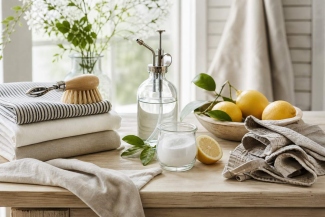
Natural Spring Cleaning Essentials: A Reusable Home Toolkit
Updated August 11, 2026
Spring cleaning becomes easier when the toolkit is small, reusable and suited to the surfaces in your home. You do not need a different disposable product for every task; a few washable cloths, sound tools and clearly labelled cleaners can cover most routine work.
This article focuses on the cleaning kit itself. For a complete room-by-room sequence, use our separate spring-cleaning plan.
1. Washable linen and cotton cloths
Cut worn but clean household linen into useful sizes, hem loose edges and reserve different colours or stitches for kitchens, bathrooms and general dusting. Linen cloths are durable and lint-light, while cotton towelling can be better for absorbent jobs.
Wash used cloths promptly at a temperature and with a detergent appropriate to the soil. Never reuse a cloth from a hygiene-sensitive area before laundering it.
2. A soft brush and a firmer scrub brush
A soft natural-bristle brush lifts dust from skirting boards, lampshades and woven baskets. A separate firmer brush handles suitable hard surfaces. Test brushes where scratches would matter, and never use one previously exposed to harsh products on delicate materials.
3. A vacuum with the correct attachments
A crevice tool reaches edges; a clean upholstery attachment helps with sofas and mattresses at low suction. Follow the furniture maker's instructions and avoid dragging a dirty tool across pale fabric. Empty the vacuum and clean filters as recommended so dust is not redistributed.
4. A small set of clearly labelled cleaners
Use products designed for the surface and follow their labels. Vinegar, bicarbonate and lemon are often described as universal natural cleaners, but acids can damage stone and other finishes, and combining household chemicals can be dangerous. Never mix products unless the manufacturer explicitly instructs it.
Store every cleaner in its original or clearly labelled container, away from children and pets. Natural origin does not automatically mean harmless.
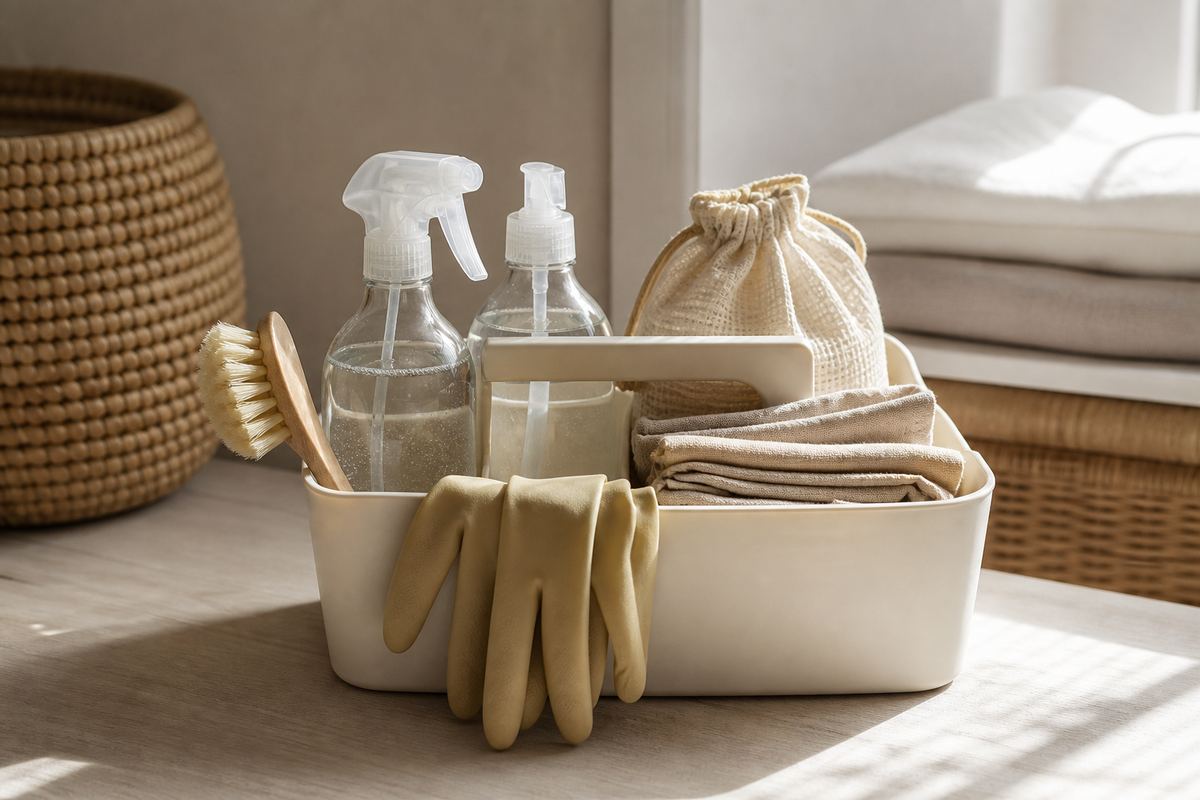
5. A caddy and a laundry plan
A simple caddy keeps tools together and prevents repeated trips. Include gloves where the product label recommends them, spare cloths and a small bag for used textiles. At the end of the session, rinse tools, launder cloths and let everything dry before storage.
Replace disposable wipes gradually rather than buying an entirely new eco-themed collection. Reusing sound tools and repurposing old linen usually creates less waste.
Frequently asked questions
Can old linen be used for cleaning cloths?
Yes. Clean, absorbent linen can be cut and hemmed for dusting and wiping, with separate cloths reserved for different areas.
Are vinegar and bicarbonate safe on every surface?
No. Acids and abrasives can damage some finishes. Check the surface maker's guidance and test carefully.
How should reusable cleaning cloths be stored?
Launder them after use and store only when completely dry, grouped by their intended cleaning area.