
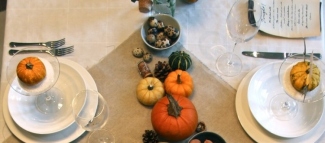
How to Create a Beautiful Autumn Tablescape
Updated August 10, 2026
An autumn tablescape works best when it feels gathered rather than overdecorated. Linen brings softness and texture, seasonal produce adds natural colour, and warm light makes an ordinary supper feel welcoming.
These five steps create a fall table that is practical enough for dinner and special enough for a celebration—without crowding guests or buying decorations that will only be used once.
1. Begin with a simple linen foundation
Choose a tablecloth, runner or bare tabletop with linen napkins. You do not need all three. A full cloth creates a softer, more formal base; a runner leaves more wood visible; individual napkins add texture to the simplest setting.
Natural flax, oatmeal, warm grey and muted checks are easy to combine with autumn colour. For a stronger look, use rust, olive, ochre or deep blue in one textile rather than every element.
2. Choose a limited seasonal palette
Start with two or three colours drawn from the room, table linen or produce you already have. Warm neutrals with green and rust feel calm; cream with deep red is richer; grey-blue with copper creates a cooler interpretation.
Repeat each accent at least twice—for example, green leaves and green-glazed bowls—so the setting feels connected. Leave some neutral space to stop the table becoming visually busy.
3. Use natural objects responsibly
Apples, pears, small squash, nuts in shells and herbs can form a low centrepiece and still be eaten later. Fallen leaves or seed heads can add texture where collecting is permitted. Never take protected plants, strip living branches or bring unknown berries into reach of children or pets.
Keep decorations below eye level so guests can see one another. Wash anything that will sit near food and use plates or shallow bowls to protect the cloth from soil and moisture.
4. Make room for food and conversation
A tablescape is successful only if the table still functions. Place plates and glasses first, then serving dishes, and decorate the remaining space. Allow room for hands to move and for hot dishes to be set down safely.
Use one main focal point rather than a line of small obstacles. On a narrow table, move larger arrangements to a sideboard once guests sit down.
5. Add warm, safe lighting
Low candles bring warmth, but use stable holders and keep flames away from linen, dried leaves, sleeves and children. Battery-operated candles are useful where open flames are unsuitable. A shaded lamp nearby can be more flattering and practical than very dim candlelight alone.

Layer place settings without excess
A dinner plate, folded napkin, glass and the necessary cutlery are enough for most meals. Add a side plate or bowl only when the menu requires it. A relaxed fold or simple knot lets the linen texture show without elaborate napkin styling.
If using place cards, write names on reusable tags or small pieces of card. Avoid glitter and plastic confetti, which are difficult to collect and add little to the natural materials.
Prepare for spills and washing
Check table linen a day before the meal so there is time to wash or press it. Keep a clean cloth nearby for spills and blot rather than rub. After dinner, shake off crumbs, treat stains promptly and follow the care label.
For detailed care guidance, see how to wash linen tablecloths and napkins. If you prefer a crisp finish, our table-linen ironing guide explains the process.
Frequently asked questions
What colours work for an autumn tablescape?
Natural linen works with rust, ochre, olive, deep red, warm grey and muted blue. Limit the setting to a few repeated colours for a calmer result.
How can I decorate a fall table inexpensively?
Use washable linen already owned, seasonal food, herbs and safe natural objects gathered responsibly. Prioritise useful pieces over single-use decorations.
Should a centrepiece be removed during dinner?
Remove or relocate it if it blocks sightlines, takes space needed for food or creates a safety risk. A low, compact arrangement can often remain.