
How Stonewashed Linen Is Made: The Production Process Explained
Updated August 10, 2026 — expanded with a step-by-step explanation of stonewashing, modern process variations, quality checks and care.
Stonewashed linen is linen that has undergone an additional finishing treatment to soften the cloth and give it a relaxed, gently worn surface. The name comes from older washing processes that used abrasive stones in an industrial drum. Modern mills may use stones, enzymes, mechanical tumbling or a combination of methods, so the exact production route varies.
This article focuses on the process. If you want the practical benefits and buying considerations, see what stonewashed bed linen is.
What happens before stonewashing?
The fabric must first be made. Flax fibre is prepared and spun into yarn; the yarn is woven into linen cloth. Depending on the product, the fabric may then be desized, scoured, bleached or dyed. These earlier steps affect how the later softening treatment behaves.
Some manufacturers treat fabric in open width, while others wash completed bedding or garments. Processing a finished item can create soft folds around seams and edges, while fabric finishing allows the mill to handle a continuous length before cutting.
Step 1: Preparing the linen
The mill checks the cloth or finished product, sorts loads by colour and weight, and selects a recipe suited to the construction. Heavy linen may need different time and movement from a lightweight weave. Dark and pale colours are normally separated to control colour transfer.
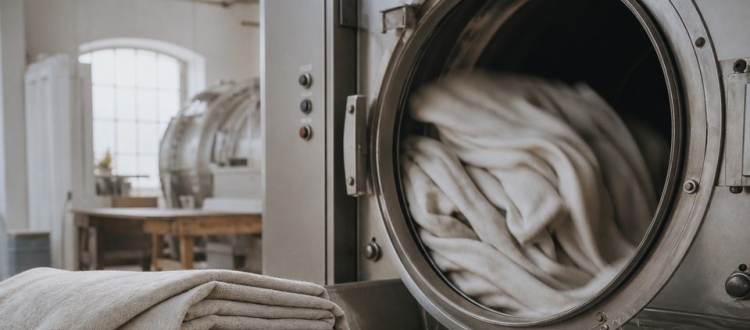
Step 2: Loading the industrial washing drum
Linen is placed in a large rotating machine with water and the chosen treatment. The load size matters: fabric needs enough room to move, but excessive mechanical action can create unnecessary wear. Temperature, water ratio, drum speed and treatment time are controlled rather than left to chance.
Step 3: Softening through abrasion or enzymes
Traditional stonewashing uses pumice or another abrasive medium. As the drum rotates, contact softens raised fibres and relaxes the surface. Stones can break down and leave residue, and aggressive abrasion may reduce fabric life if poorly controlled.
Many modern processes use cellulase enzymes. These act on tiny exposed cellulose fibres at the surface, helping produce a cleaner, softer handle with less physical stone residue. Mechanical tumbling can supplement the effect. “Stonewashed” has therefore become a familiar commercial description for the softened result even where a modern stone-free process is used.
Step 4: Rinsing and neutralising
After the desired effect is reached, the treatment must be stopped and the fabric rinsed thoroughly. Enzyme processes may require a change in temperature or pH to deactivate the enzyme. Residue is removed so it does not continue affecting the textile or interfere with later finishing.
Step 5: Drying and mechanical relaxation
The linen is extracted and dried under controlled conditions. Tumbling contributes to the relaxed surface and helps reduce stiffness. Overdrying and excessive heat can cause shrinkage or unnecessary stress, so the process should be matched to the fabric.
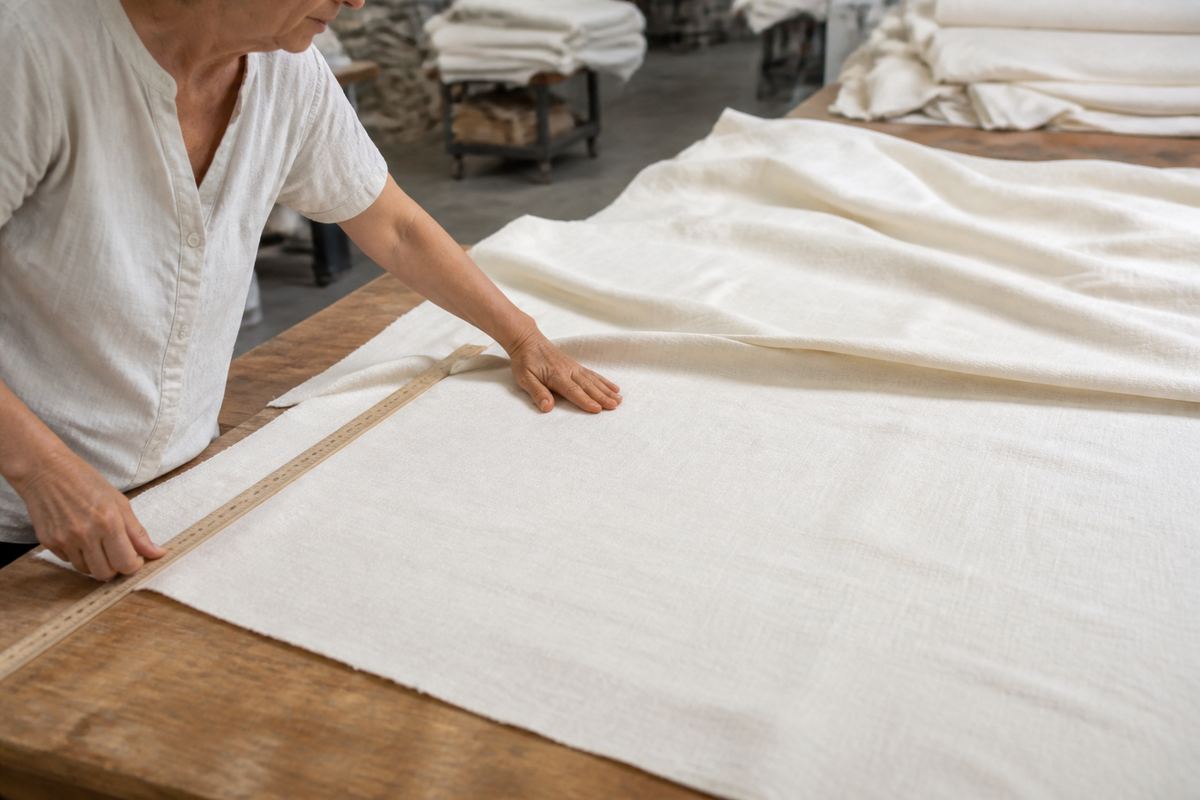
Step 6: Inspection and testing
Quality control can include checking shade, dimensions, seam performance, pilling, handle and visible damage. The manufacturer compares the result with an approved standard. A good finish should feel intentional and consistent without holes, severe streaking or weakened seams.
Does stonewashing pre-shrink linen?
The wet process can remove part of the dimensional change that untreated linen might experience, but “stonewashed” should not be interpreted as a guarantee of zero shrinkage. Fibre, weave, construction and future washing conditions still matter. Follow the product’s care label and allow for any shrinkage figure stated by the supplier.
How stonewashing changes appearance and handle
- The fabric generally feels softer from first use.
- The surface looks more relaxed and less sharply pressed.
- Seams and edges may develop gentle tonal variation.
- The cloth often drapes more easily.
- Natural creasing remains part of linen’s character.
The treatment does not change linen into a different fibre. It is still flax linen; stonewashing is a finishing stage.
Environmental questions to ask
No finishing method is impact-free. Useful questions include how water is managed, whether enzymes or stones are used, how treatment chemicals are controlled, how wastewater is handled and whether the finish extends useful product life. A softer item that is used and cared for for many years can offer value, but vague claims should not replace specific production information.
Caring for stonewashed linen
Use a gentle detergent, avoid unnecessary high heat and do not overload the machine. Shake out bedding before drying and remove it promptly to reduce deep creases. Stonewashed linen usually does not need ironing; if you want a smoother finish, press while slightly damp.
Frequently asked questions
Are real stones always used to make stonewashed linen?
No. Some processes use abrasive stones, while others use enzymes and mechanical tumbling to create a similar softened result.
Is stonewashed linen lower quality?
Not inherently. Quality depends on the original fibre and fabric as well as how carefully the finishing treatment is controlled.
Can stonewashed linen still shrink?
Yes. Washing during production may reduce later dimensional change, but it does not guarantee zero shrinkage. Follow the stated care instructions.